 What are the sacred writings of Hinduism? This question begs a more basic question, namely, what are sacred writings? In other words, before we can discuss the sacred writings of Hinduism, we should first come to an understanding of scripture. When we use the terms “sacred writings” or “scripture,” this implies written texts. As we have noted earlier, written texts are a part of a cumulative religious tradition, the “stuff” of religion. In many cases, and particularly in the case of India, the original sacred texts were not texts a
t all; they were oral transmissions passed down from teacher to student through memorization. But even these transmissions are part of a cumulative religious tradition, and though it was considered profane to put these sacred dialogues into writing, today, virtually all sacred writings of all major religion s are in the form of written documents, scripture. Given this fact, one could argue that what scripture actually is are voice sounds and words on paper, or more likely today, digital code and marks on a computer screen. In this sense, scripture is not different from any common dialogue or piece of writing. But we know there is a world of difference between scripture and a common newspaper or a novel. Scripture is sacred. Newspapers and common novels are secular. It is therefore, the quality of “sacredness” that creates the difference between scripture and an ordinary piece of writing.
What is the source of such sacredness? Is it something within the voice of the teacher or the text itself that creates sacredness? The answer to this question is the same as what lays at the heart of religion; namely, faith. It is the faith of the reader that gives sacredness to the written text. A person reads a common newspaper with a certain mental state; he interacts with the newspaper in a certain way; the same reader, when he reads a religious text, also enters a certain mental state, but in this case he perceives the religious text as sacred. When reading the religious document his mental state is one of “scripturalizing.” Through his faith, he scriptualizes the religious document. Another reader, without the element of religious faith, reads the same religious document simply as a literary or an historical document and so may not perceive the scriptural aspect of the text. What is scripture, therefore, is determined by the mental state of the reader; and when enough readers agree that a certain document deserves the stature of sacredness, the document attains the collective status of “sacred writing,” scripture. This is how scripture is created. One may also argue that it is the word of God or even of saints that create sacredness, but we know that one person’s God may be another person’s demi-god or even a demon, and that one person’s saint can also be another person’s terrorist. It always comes down to individual and collective faith. All aspects of a cumulative religious tradition are predicated upon faith.
The Shruti Vedas
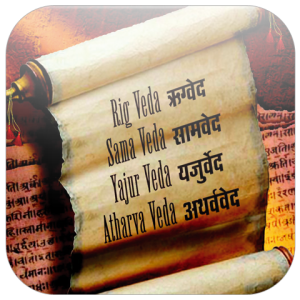
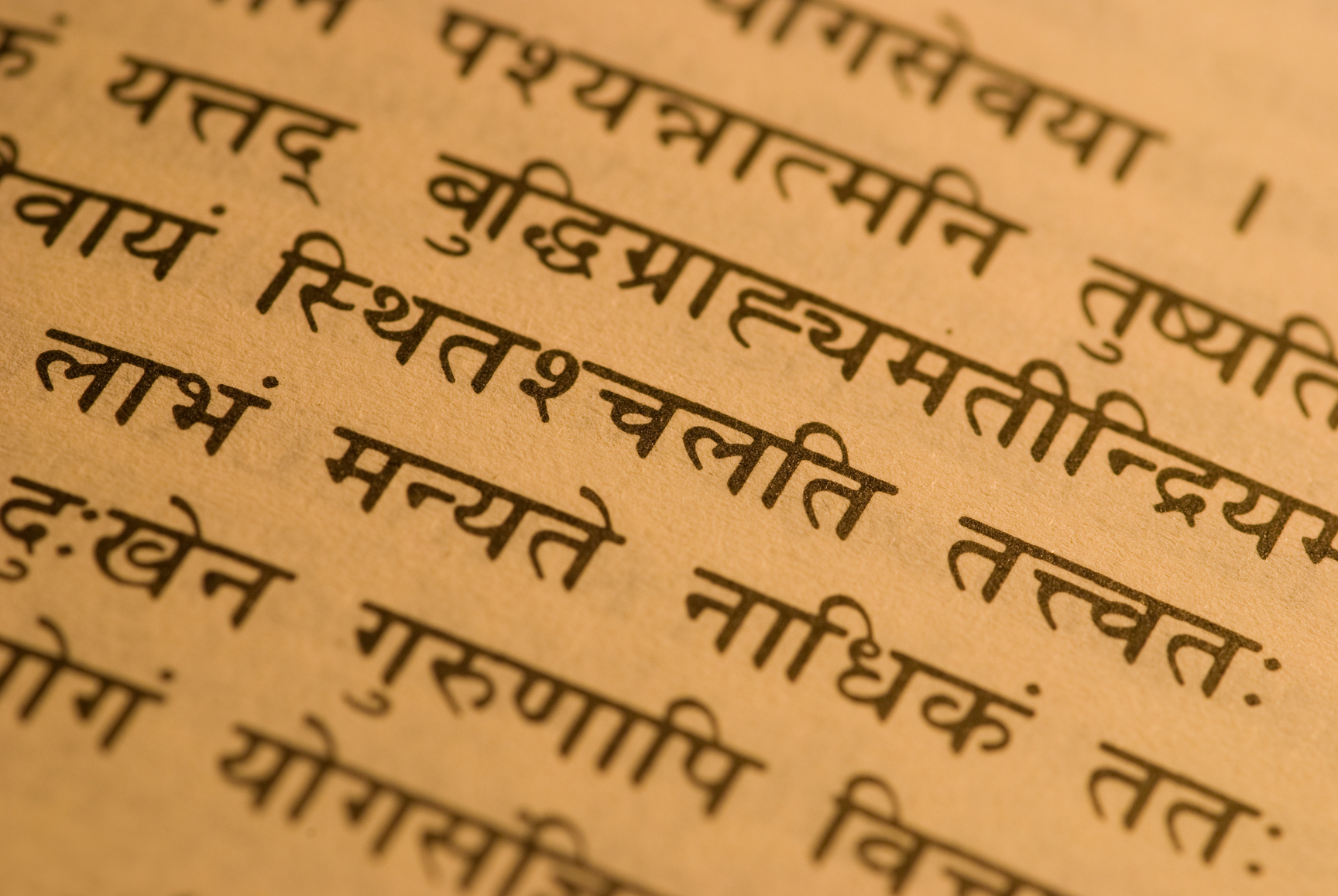
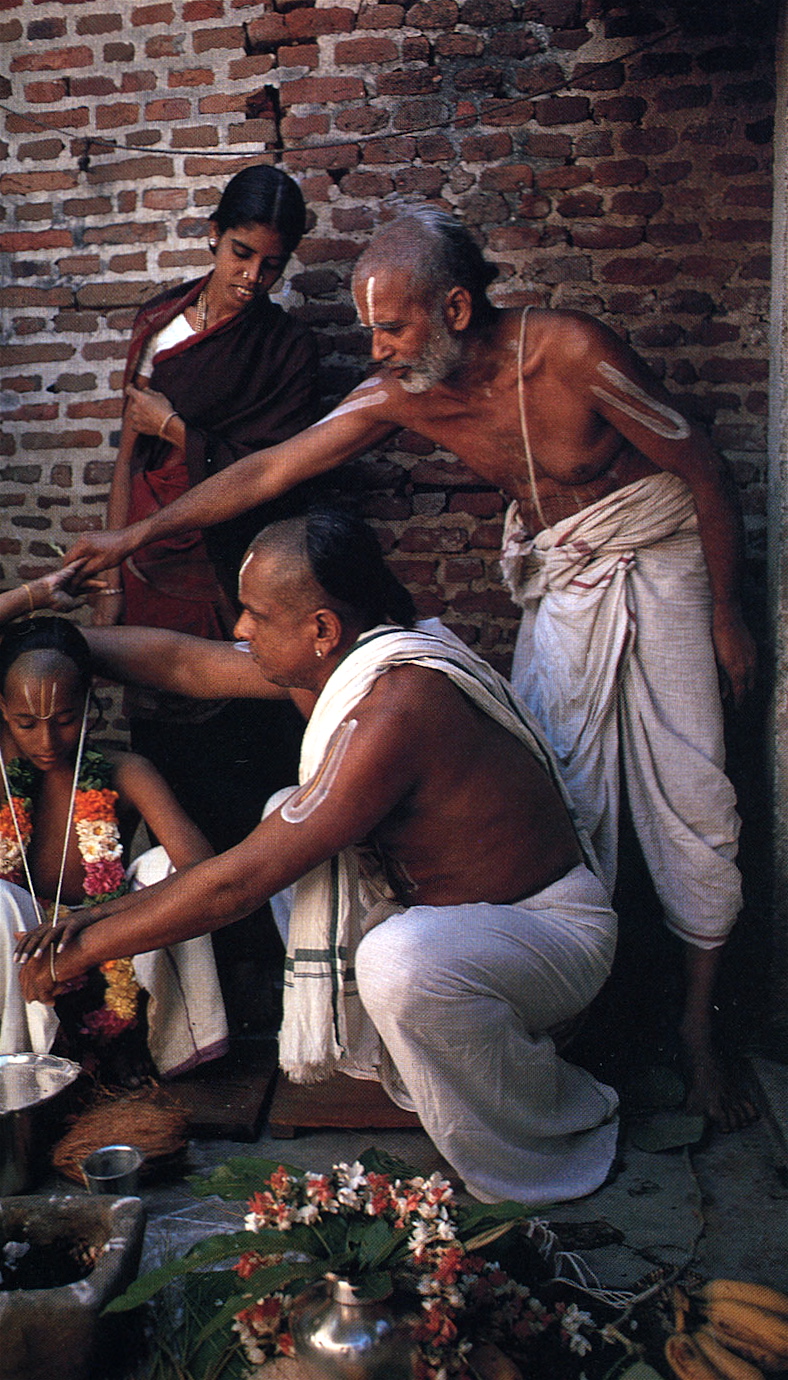
There is good evidence that the ancient Indian, Zoroastrian, Greek, Roman, and pre-Christian European religions all share a common Aryan heritage. They are of the same religious type, even though they have been processed differently. The great contribution of these Aryans in India was primarily their language, Sanskrit, and their sacred writings, the early Vedas. The word veda comes from the Sanskrit root vid, “to know.” So the Vedas are literally what was known by the ancient Aryans, in other words, their sacred knowledge. As we have noted, the reference to writings is not strictly correct because the early Aryan traditions in India were oral. The sacred traditions of early Hinduism inform us that their seers, known as risis, “heard” the Vedas. By “heard” we mean that a kernel of these Vedas appeared in the hearts of these seers, who then elaborated upon this kernel to produce the oral tradition of the Vedas. The early Vedic tradition is consequently called shruti, “what is heard.” This shruti tradition was also known as an apaurusheya tradition. Purusha means man, paurusheya means composed by man and apaurusheya means not composed by man, i.e., made by God. Today, this shruti tradition appears as the four Vedas: Rig, Sama, Yajur and Atharva. These four Vedas comprise what is often called the Shruti Vedas. These four Vedas were then each divided into four divisions known as branches: Samhitas, Brahmanas, Aranyakas and Upanishads
The Samhitas are hymns praising various Vedic Deities. These Deities, for the most part, do not include the common Deities of modern Hinduism: Krishna, Rama, Shiva and Hanuman for example. Instead, the primary Deities of the Shruti Vedas are Agni, Indra, Varuna, Mitra, Soma, the Rudras, the Vasus, and a whole host of Deities that are barely known in modern Hinduism. The Deities of the Shruti Vedas are primarily “nature” Gods and these Samhita hymns were used to call upon these Deities for rain, food and other necessities of life. These hymns formed the substance of the rituals used to propitiate these Deities. The Brahmanas are works detailing these rituals. They may be compared to the Book of Leviticus in the Bible. They are technical books describing the details of the Agni Hotra or fire and other rituals. They elaborately describe the articles to be used in these ceremonies as well as the cosmic significance of these rituals to the universe. The Brahmanas are the beginnings of Hindu theological reflections. The next branch of the Vedas are the Aranyakas. Aranya means forest and aranyaka means “in the forest.” These forest works continue the theological speculations of early Hinduism, but they go beyond the rituals and start to develop the theology of the early Aryans that eventually takes mature form in the Upanishads which, today, are the most well known part of the Shruti Vedas. The Upanishads are the premier theological discussions of early Hinduism and they appear mainly in the form of dialogues between students and teachers asking such question as, What is soul? What is God? What is the nature of reality? What is death? and so forth. The number of Upanishads varies with the highest number being over a hundred. Today, the most popular number of Upanishads are between 10 and 13. The famous teacher, Shankara commented on 10 Upanishads. Later Madhva and others followed his example. These works are well worth reading for they are some of the most profound theological discussions of humankind.
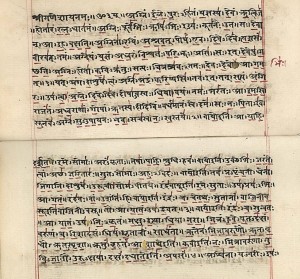
Interestingly, these four Shruti Vedas appear in a version of the Sanskrit language that is considerably different than the Sanskrit of m
odern Hinduism. This early Sanskrit is generally called Vedic Sanskrit as opposed to the more common classical Sanskrit of modern Hinduism. In addition to these four Vedas, there are a set of works collectively called the Vedangas, supplementary works. In order to read and perform the rituals of the Shruti Vedas, one needed a knowledge of grammar, meter, pronunciation, astronomy/astrology, and so forth. These are the Vedangas, which are traditionally six in number. For the most part these four Vedas, along with all their divisions and the Vedangas, comprise the Shruti Vedas.
The Smriti Vedas
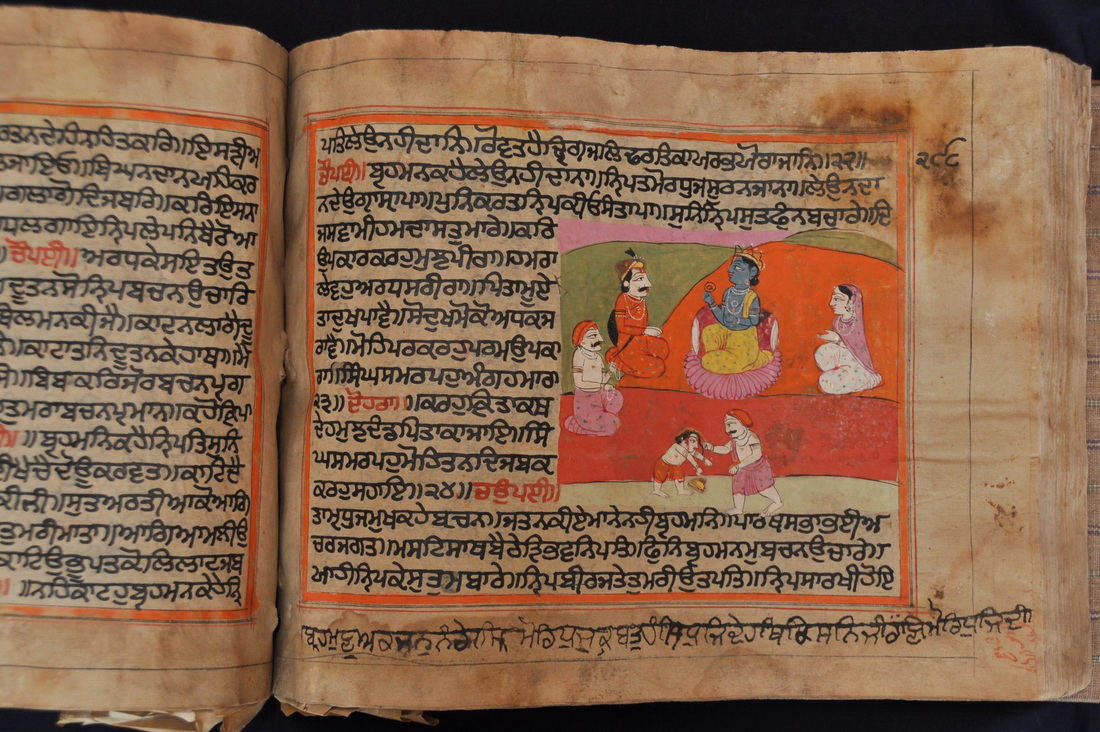
Hinduism views time in great cyclic periods known as yugas. There are four such yugas and today we live in the time period known as Kali Yuga. This is the period of spiritual darkness, ignorance and destruction. At the beginning of this Kali Yuga, it is described how the great sage, Vyasa, looked into the future and saw mankind in a fallen condition with decreased mental abilities and a shortened life span; and so, to mitigate the suffering of mankind, he codified and put the Shruti Veda into writing. He also saw the need for a simplified form of the Shruti Vedas that could be understood by the fallen people of Kali Yuga, so he created what is sometimes called the “fifth Veda.” This fifth Veda is a catch-all term that refers to all subsequent developments after the four original Vedas. This new phase of the tradition is called the Smriti Vedas and it is described as a paurusheya, man-made tradition. Literally, smriti means “remembered,” but a better way to think of this later Vedic tradition is in terms of what has been made by man and written down from the outset. Thus the Smriti Vedas are the Vedas for Kali Yuga and they include the two epics poems, the Mahabharata and the Ramayana, and the numerous Puranas that, all together, form the basis of modern Hinduism. The compiler of this fifth Veda is known to be Veda Vyasa, but he word vyasa simply means compiler and debate continues whether there is one Vyasa or many vyasas. Popular tradition informs us that there was only one Vyasa. The Mahabharata is the history of ancient India from the beginning of Kali Yuga and the famous Bhagavad Gita (The Song of God) appears within this great epic. The other major epic of ancient India is the Ramayana composed by the sage Valmiki. The Ramayana is said to predate the Mahabharata, but it is also included within the compass of the Smriti Vedas. The Ramayana is the story of Rama and Hanuman, two of the most popular Divinities of modern Hinduism.
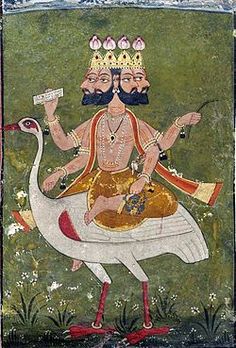
As far as the Puranas are concerned, they are collections of ancient stories. The word purana means old and so they are compilations of old stories about gods, sages, and kings, along with the genealogies of famous royal families. The Puranas include stories of creation, destruction, and stories taken from different yugas and even different parts of creation such as the various heavens and hells. Tradition mentions eighteen Puranas, the most common of which are: the Bhagavata, the Vishnu, the Shiva, the Skanda and the Garuda Puranas. There is even a set of smaller Puranas known as upapuranas that are also eighteen in number. Most people, however, do not know all these works. In general, the two epics and the Puranas comprise the bulk of modern-day Hinduism. Of all these books, theologically the Bhagavad Gita is the most prominent book within the Smriti tradition. If the Upanishads are the most prominent works of the Shruti tradition, it is safe to say that modern Hinduism is mainly based on the works of the Ramayana, the Bhagavata Purana and the Bhagavad Gita. The Mahabharata is well known, but it is so vast, over ten times the size of the Iliad and the Odyssey combined, and therefore so overwhelming, that it is almost unreadable. Many people are even afraid to keep a Mahabharata in their homes since it describes the story of a devastating war that almost ended humanity. People do not want war in their homes.
There are also many other works that are not written in Sanskrit, but which also play a major role in modern Hinduism. The most common of these works is the “Hindi Ramayana” known as the Ramcharit Manas, by Tulsi Das. It is a devotional reworking, composed in an older form of Hindi about 500 years ago, of the original Sanskrit Ramayana. The famous Hanuman Chalisa, forty verses in praise of Hanuman, is taken from this Hindi Ramayana and is still commonly recited today. Another set of books that are not in Sanskrit, but which also inspire the lives of millions of Hindus today in South India are the works of the twelve Alwars. This is the Divya Prabhanda, which is a collection of devotional and theological prayers written in Tamil. These are ancient works and they are also considered to be “Vedic.” In addition, there are many more secular works also included within the general category of being Vedic. These are works on medicine, Ayur Veda; law, the Dharma Shastra; architecture, Vastu Shastra; political science, Artha Shastra; morality, Niti Shastra; and of course, love and pleasure, the Kama Shastra. So all of these, the Shruti and Smriti Vedas, comprise the shastra or sacred writings of Hinduism.
 After all the discussion about the Hindu calendar being a lunar calendar, makara sankranti is one of the few major festivals that does not follow the lunar calendar. Instead it is celebrated according to the solar calendar and therefore always falls on the same day in the western calendar, January 14th. Most other Hindu festivals follow the lunar calendar and therefore will vary by approximately three weeks from year to year against the solar calendar. Makara Sankranti is the celebration of the sun beginning its path on the
 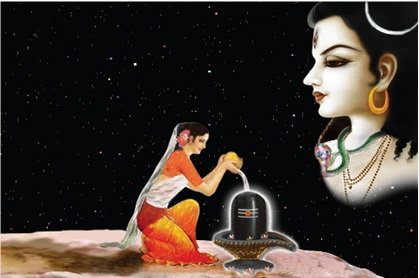 Literally, the “Great Night of Shiva” is celebrated every year on the 13th or sometimes the 14th lunar night (
 Also known as the Festival of Colors or even the Mardi Gras of Hinduism, Holi traditionally takes place over two days in late February or early March on the full moon day of the month of Phalgun. Holi is a popular spring festival observed particularly in North India that includes a bonfire and the throwing of colored powders. On the first day there is a bonfire which represents the burning the demoness, Holika.
 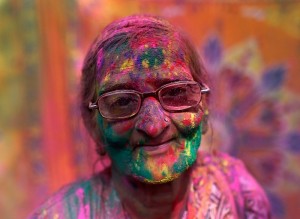 It is the triumph of good over evil. On the second day colored powders, red, blue, yellow, green, white, are exchanged between the participants along with hugs and smiles. In the west the two days are usually merged into one afternoon or evening. It is a joyous festival as you can see from the photo.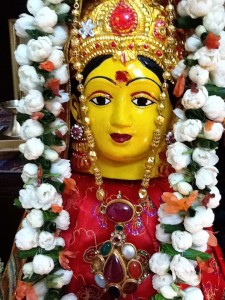
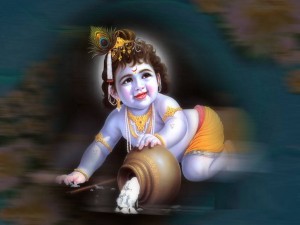 Krishna Janmashtami is observed on the eighth lunar day of the dark half of (krishna paksha) the month of Shraavan when the
 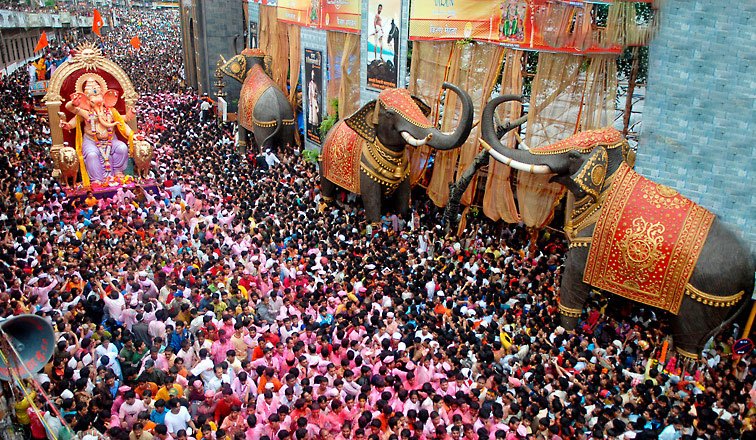 Ganesh Chaturthi is the festival day when Ganesha, the son of Shiva and Parvati, first appeared for all his devotees. The day is also known as Vinayaka Chaturthi and it is observed in the month of Bhadrapada starting on the fourth lunar day (chathurthi) of the waxing moon.
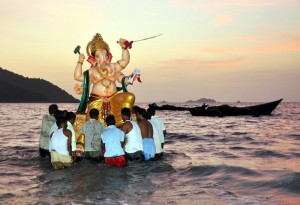 This always comes between late August and early September. Traditionally the festival lasts for 10 days, but in most Hindu temples in the West, the festival is generally celebrated for just one day. Ganesha is widely worshipped as the supreme Deity of wisdom, prosperity and good fortune. Most Hindus will begin any puja or important event with the invocation of Ganesha.
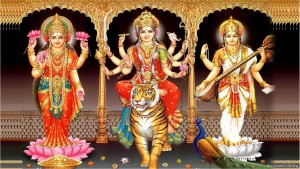 The nine nights are divided into three sets of three nights each to adore three different aspects of the Goddess. On the first three nights the Goddess Durga is invoked as a spiritual force to destroy all impurities, vices and defects. On the second set of three nights the Goddess Lakshmi is adored as the giver of spiritual wealth. The final set of three nights is spent in worship of the Goddess Sarasvati, who is the embodiment of wisdom. In order to have full success in life, believers seek the blessings of all three aspects of the Goddess, who first destroys impurities from the heart, then endows the worshipper with spiritual powers, and finally gives the maturity of wisdom to know how to employ these great powers. Hence the nine nights of worship. Most common of all is the traditional Ras Garba dances that are performed during these Nava Ratris, This dance is traditionally a Gujarati custom, but it is quickly becoming the main focus of the Nava Ratri celebrations in the West.
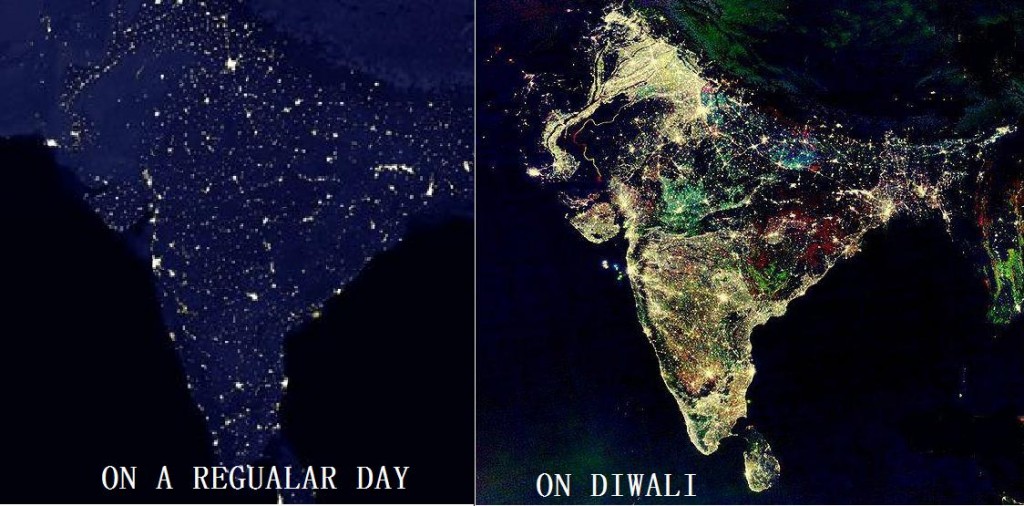 In Sanskrit Diwali is written as dipavali, “dipa” is a lamp and “avali” means a row. So dipavali is literally a row of lamps. Today in many Western countries Diwali has become famous as The Festival of Lights. Similar to Christmas in terms of lights, Hindus will string lights around their houses and temples. Diwali is always celebrated on the new moon night at the end of the month of Aashwini. There are numerous interpretations regarding the origins of this famous festival, but the one I prefer connects to the Nava Ratri and Vijaya Dashami festivals. After killing Ravan on the 10th lunar day (Vijaya Dashami), Rama returns to Ayodhya, his capital, on the following new moon (amavashya) night. Diwali comes exactly twenty days after Vijaya Dashami. Since there is no moon on that day, the residents of Ayodhya are said to have illuminated the city by placing lamps on their homes and other building eager for Rama’s return. Hence the name Diwali. Other interpretations have to do with Krishna defeating the demon Narakasura, or in honor of the day Bali went to rule the nether-world according to the order of Vishnu. In all cases Diwali is the celebration of good conquering evil and the bringing of light back into the world. On the day of Diwali, many devotees wear new clothes, share sweets and snacks, and light firecrackers. Some North Indian business communities start their financial year on Diwali and so open their new business books on this day.
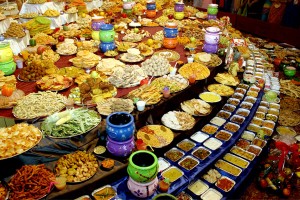 Annakuta generally takes place the day following Diwali. “Anna” means food and kutameans a “mound,” so literally Annakuta is a “mound of food.” The festival is celebrated in temples as members bring food offerings that are added to a growing number of dishes used to decorate an altar. Sometimes the festival is connected to another festival called Govardhana Puja, which celebrates the day Shri Krishna lifted the mountain known as Govardhana. In this case the great “mound of food” becomes Govardhana mountain. Usually the festival includes a Krishna puja, bhajanas, a telling of the story of Krishan lifting Govardhan mountain and arati.