As surprising as it may seem, Hinduism has no one word “God” as English does. Instead, it has many words that each describe a certain understanding of God. This is something like in many Eskimo (Inuit) languages there is no one word for snow, instead there are many words, each describing snow in its various varieties, as wet, dry, iced, melting, slushy, and so many other forms that people who do not live with snow cannot imagine. In a similar way, Hinduism is rich in theology and so there are many words for God. Yet, if we needed to suggest a fast equivalent probably the word Bhagavan might be the easiest equivalent to God in English.
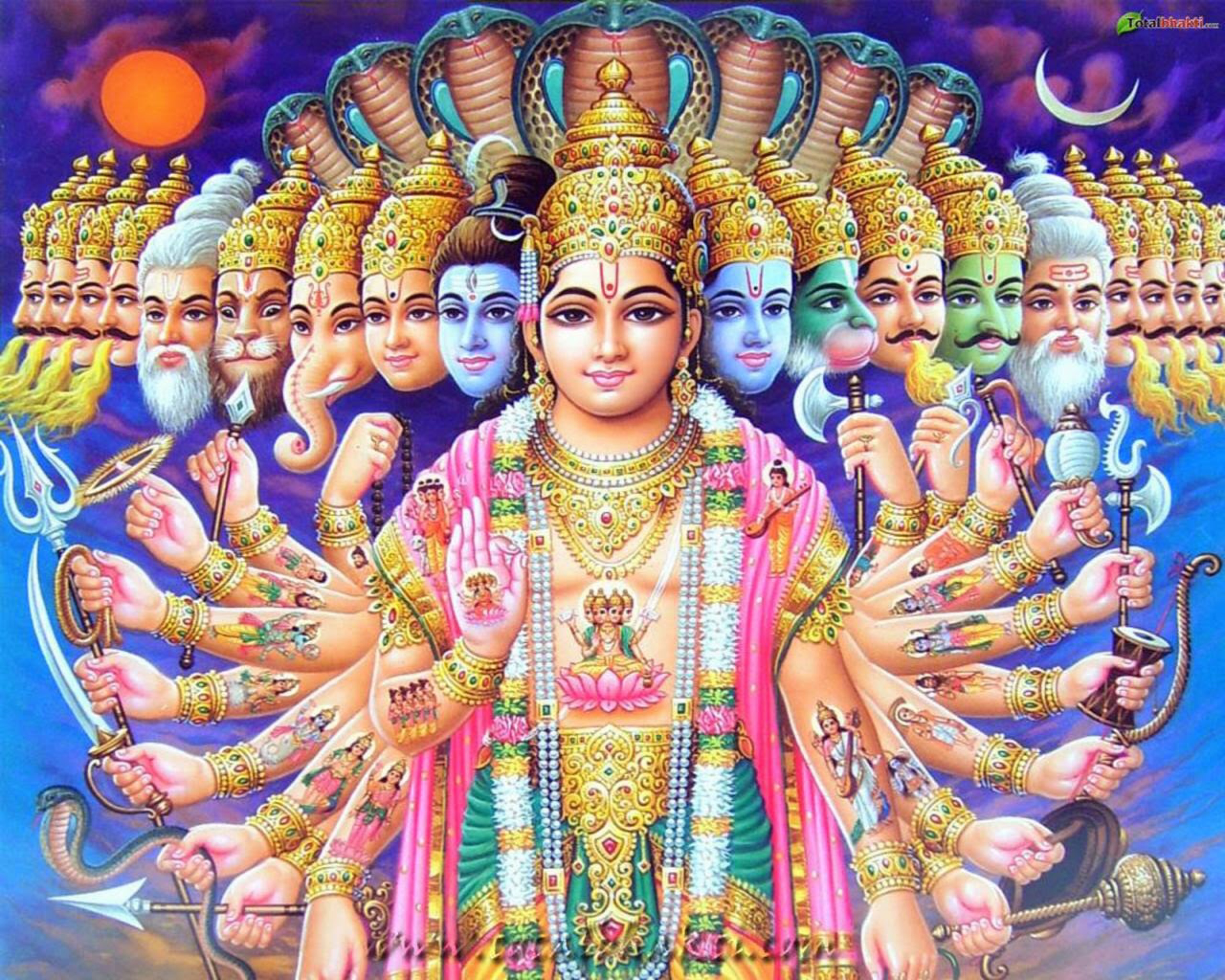
There is a famous verse from the Bhagavat Purana, (1.2.11) a popular devotional text, that gives a good understanding of how “God” is generally understood in Hindu terms. The text begins by saying that God is beyond human understanding, No words or human conceptions can even begin to touch God, none the less, humans have three basic and limited ways in which they try to conceive of God. These three ways are as brahman, as paramatma and as bhagavan. Brahman is God as raw energy, as force. It is an impersonal understanding of Divinity. Paramatma is God as indwelling spirit, a kind of generic presence that exits within all things. Bhagavan is God in personal terms, as Krishna, Rama, Shiva, Lakshmi, Durga and the myriad of other Gods and Goddess. In this way, as impersonal force, as indwelling spirit and as transcendent personality, human beings conceive of the Divine. According to the Bhagavat Purana such understandings are universal categories of divine “seeing” and we suggest that they are expressed in one form or another within all religions.
Here are a few basic “God terms” that are commonly used within Hinduism:
Om–God as Divine Sound
Bhagavan–God as Supreme Personality,
Isha–God as Supreme Lord
Purusha–God as Supreme Man
Atman-Supreme Soul
Brahman–God as impersonal force or energy
Sat–Supreme Permanence
Cit–Supreme Consciousness
Ananda–Supreme Bliss
Satya–Supreme Truth
Mahesha–the Great Lord
Tat–That
Tattva–Absolute Truth
Purnam–The Whole
Eka–the One
Indeed Sanskrit has many many such words to describe God. These are at least some of the more common ones that most people may hear.
Divinity as one Desires
There is one more concept of Divinity that is worthy of note. This is the concept of ishta devata, or one’s personal way of perceiving Divinity. Ishta means ” desired” and devata means “divinity,” and so ishta devata can be roughly translated as, “Divinity as one desires.” If you recall the term adhikara, which meant that each person is at a unique place in spiritual evolution and therefore has “rights” to a certain level of spiritual awareness, in a similar way, God, being limitless, can be approached in an infinite number of ways according to the adhikara of the individual. Each individual has the right, therefore, to conceive of and worship God according to his or her unique position and pychology. How this plays-out in practice is most interesting. Some people, for example, will want to worship God in a very personal and direct way and so they will focus on the worship of a specific personal form of God; perhaps as Rama or Krishna. Even within this personal approach of worsphip some people will want to worship only Krishna in one of His childhood forms, as baby Krishna (Gopala) or as the young Butter Thief (Makhan Chora). There is a huge number of devotional texts devoted to Krishna as the Butter Thief. Others may prefer to see their personal God as Shiva, Ganesha or in female form as Devi. Others, however, may consider the worship of a personal God to be limiting and prefer to approach Divinity in more abstract terms, as brahman or paramatma, for example. Consequently, there is room for huge differences between individuals according to the principle of ishta devata, and from a Hindu perspective of Divinity, there is no conflict.

 Astrology is a vast subject that cannot possibly be covered in this primer. However, it is possible to give a basic understanding of the theory behind astrology as it is understood in Hinduism.
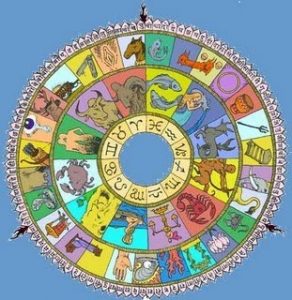 Hindu astrology, also called Vedic Astrology is not calculated in the same way as Western astrology. In the West most people know their astrological sign and they may even check their horoscope in the newspapers, if only for “entertainment purposes.” But if you think you are an Aries, a Taurus or a Gemini in Western astrology, this is not the case with Hindu astrology. Western astrology is tropical and Hindu astrology is sidereal. This means Western astrology is based on the orientation of the Earth to the sun, whereas Hindu astrology is based on the position of the stars relative to the earth. This is why it is called sidereal. The word sidereal means “with respect to the stars.” Understanding this difference is technical and not a matter that needs to be explained here, suffice to say, that the starting point of Western astrology is not the same as the starting point of Hindu astrology. This does not mean that one form is better than the other, it just means they are different and so you cannot compare one with the other. If you are an Aries in Western astrology, in Hindu astrology you may not be the same.
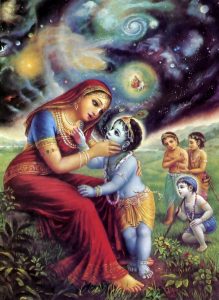 The famous story of Krishna’s Mother Yashoda, who gazes into her son’s mouth and sees the universe, illustrates this idea. Once you begin thinking that the whole is embedded within every part of this creation you can see a relationship between the outer world and the inner world, between the microcosm and the macrocosm. This means that by measuring the outer world, one can grasp an understanding of the inner world. But even more importantly, by influencing the outer world one can influence the inner world. Thus we have the foundations of Hindu astrology. Astrology is a measurement of the outer world that allows an understanding of the inner world. The astrological chart is a snapshot, not only of the universe at a certain time and place, but also a snapshot of the inner life of an individual at a certain time and place. In other words, the planets we see in the heavens have a corresponding set of “planets” within. There is a Mars above us and a Mars within us. Read the meaning of the Mars on the outside and you get an understanding of the Mars within. Align yourself to the Jupiter without and you align yourself to the Jupiter within. This is the understanding behind Hindu astrology.