Sri Deva Sthanam

Where Faith and Scholarship Meet

  • Sri Deva Sthanam
  • About Us
  • Hindu Primer
  • Biography
  • Translations
  • Articles
    • Biographies
    • Sanskrit
    • Astronomy
    • Samskara
    • Vedic Chants
  • Vedic Chants
  • Sanskrit

February 7, 2014 by admin

Hinduism and The Indus Valley Civilization

The Indus Valley
The Indus Valley

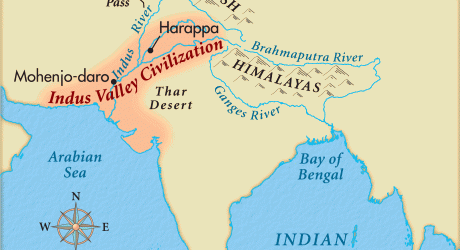
The dating of ancient Hinduism has always been, and will likely continue to be, a difficult issue. Prior to 1923 the only means of dating the origins of Hinduism was through textual evidence found in the Shruti Vedas. The early Aryans left no cities or other major architectural remains, therefore, textual evidence alone could push early Hinduism back to only about 1500 BCE. In 1923 a great civilization along the banks of the Indus River was unearthed, and the possibility to push the origins of Hinduism back many millennia arose. Now a great controversy rages regarding the origins of this civilization and its relationship to Hinduism. There are indications that Indus Valley culture has roots far back into neolithic times (7000 BCE), but current evidence places the active phase of this culture between 3300–1700 BCE, with its high points between 2600–1900 BCE. If a link can be made between this culture and Hinduism it could push the date of Hinduism back many more millennia than current textual evidence allows.

The center of Indus Valley culture was along the Indus River basin and its tributaries, which places most of it in present day Pakistan, but ruins of this culture have also appeared as far west as northern Afghanistan along the Oxus river and east into present day Gujarat, and even into Haryana State in central India. This covers an area the size of Western Europe and so far over a thousand cities and settlements have been located!
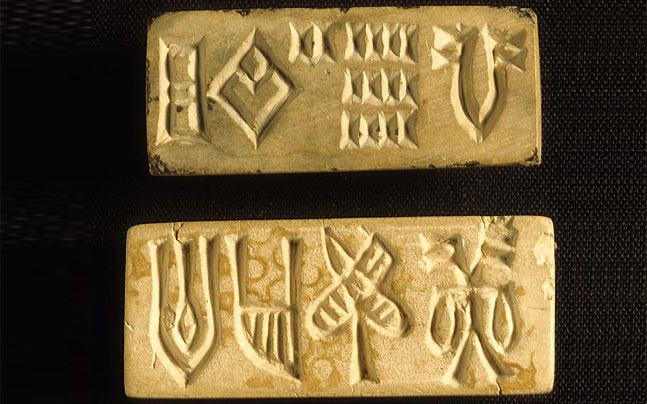
IndusValleyScript
Indus Seals

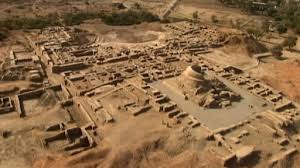
IndusRuinsThe Indus Valley people left behind an extensive set of cities and towns, the most notable of which are Harappa, Mohenjo Daro and Lothal, and through these sites it is clear that they were well organized with planned streets, elaborate bathes, covered sewage systems, water and drainage to individual homes, and even large port facilities. As in ancient Egypt and Mesopotamia, grain appears to be the basis of the economy. This is evidenced by the extensive storage structures found in most cities and towns and in particular at the port city of Lothal. In fact, the Indus Valley Civilization is the largest of the four ancient world civilizations that includes Egypt, Mesopotamia and China. Unfortunately, it is the least known because its script has yet to be deciphered. Indeed, there are over 400 distinct symbols found on thousands of pieces of pottery, seals, amulets and other artifacts, but no “Rosetta Stone,” or means of deciphering the script has yet been found, and without this it is likely that the origins of this civilization will remain obscure. This, of course, is the crux of the problem in trying to relate this civilization to ancient Hinduism.
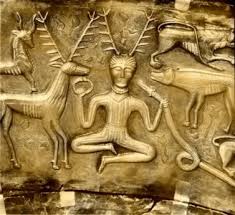
ProtoShiva
Proto Shiva

At present there are three main theories to explain the origins of the Indus Valley Civilization and how it relates to Hinduism. The first is that it is an Aryan civilization and the script is an early form of Sanskrit. The second is that the culture is proto-Dravidian and therefore a part of the indigenous culture of the Indian sub-continent and, finally, that it has no relation to either Aryan or Dravidian culture and consequently no relationship to Hinduism. There are problems with all three of these hypothesizes.
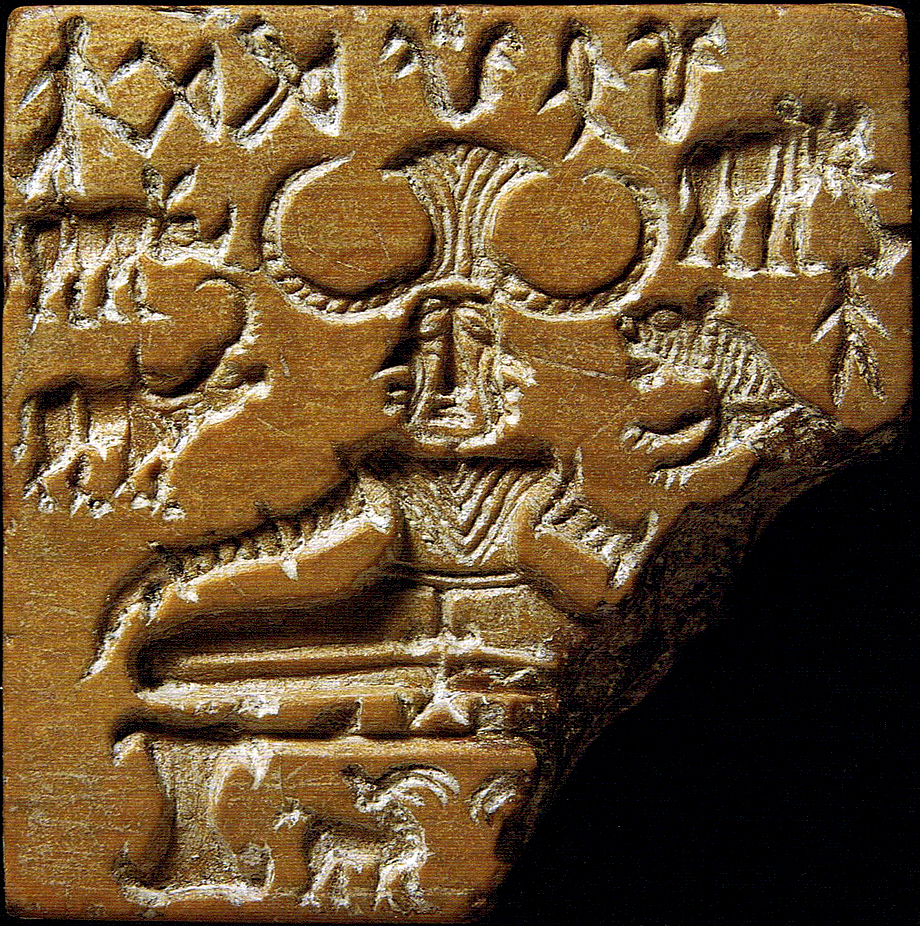
Shiva_PashupatiSigns of ancient remains first appeared in the Indus Valley during the 1800s when Europeans began to move through the area in numbers. In fact, bricks from this ancient civilization were unknowingly used by the British when they built the first railroads in the 1860s, but it was not until the 1920s when John Marshall, director of the Archaeological Survey of India, started an excavation at Harappa that it became apparent just how ancient and extensive this lost civilization was. Along with finds from other archaeologists, who were excavating at Mohenjo Daro, Marshall believed that they had found evidence for a new civilization that was older than any they had known before. It was originally thought that the civilization was early Aryan and the script was a form of the Brahmi script and therefore proto-Sanskrit. The Aryan theory, however, soon became rejected because the Indus culture showed no signs of the chariot, the horse, iron, ritual fire use, or other haul marks of Aryan culture described in the Vedas. Consequently, speculations grew that the script was some form of Sumerian, Egyptian, Hittite, or even old Slavic. In recent years, with the desire to show that Aryan culture was indigenous to the Indian sub-continent and not the result of migration, the theory that the Indus Valley Civilization was Aryan has again been raised by different groups trying to establish this view.
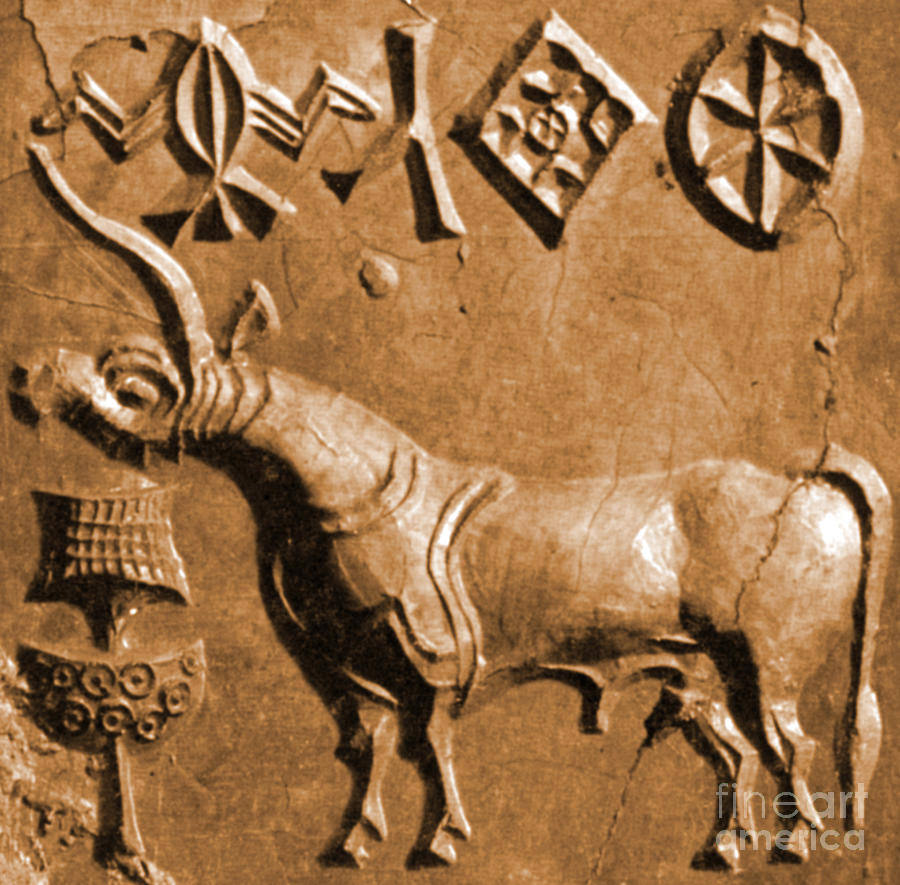
indus-valley-unicorn-relief-science-source
Indus Bull and Seals

The second theory, which is currently popular, is the proto-Dravidian theory that developed during the late 1960s and 1970s by Russian and Finnish teams of researchers. They tried to show that the symbols can be derived from the Dravidian language group. Generally this language group is found in south India, but there are pockets of it scattered throughout India, particularly in northern Pakistan, which gave credence to this theory. If, indeed, the Indus culture is Dravidian in some form, it pushes the dating for the Dravidian side of Hindu culture back considerably. However, major challenges have been presented against the script being Dravidian and therefore the proto-Dravidian theory is far from confirmed.

One of the strongest pieces of evidence that is used to show either an Aryan or Dravidian link to modern Hinduism are some of the images on the Indus seals. The image of the bull, the mother goddess image and the so called proto-shiva seal are all used as proof of a Hindu connection. Unfortunately, non of these images show conclusive proof of a Hindu connection. Both the symbols of the bull and the mother goddess are common throughout the ancient world. The so-called proto-shiva shows a cross legged person sitting amongst animals, but even this has been challenged. At the present time, this is still a hot area of discussion and no matter what the various groups try to show, without a clear deciphering of the Indus Valley script there is still not enough evidence to link the Indus Valley Civilization to Hinduism or even to conclusively show that it is not apart of ancient Hinduism.

The third theory, which has been brought forth in recent years by a team of American researchers, challenges both the Aryan and Dravidian origins of the Indus symbols, and argues that the symbols are not evidence of written language and therefore there is no justifiable connection to either Dravidian or Aryan cultures. They argue that the Indus Valley Civilization was non literate and completely separate from both the Dravidian or Aryan worlds. All three theories, of course, have their proponents and opponents with interesting arguments, but the conclusion is unfortunately that we still do not know what the origins of the Indus Valley civilization were or what its connection to ancient Hinduism was.

Filed Under: The Origins

February 6, 2014 by admin

The Origins of Hinduism


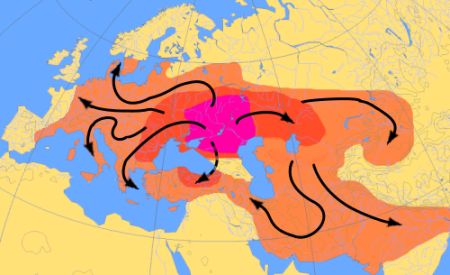
AryanMigration
Indo-Aryan Migration Theory

In terms of its religious development there are now two basic theories that attempt to explain how Hinduism first developed within India, and they both draw on the famous ekam sat viprah bahudha vadanti verse for their effectiveness. One suggests that at some time towards the end of the Indus Valley Civilization (circa 1700 BCE) a nomadic people called the Aryans moved into northern India from the steppes of  Asia Minor. This is called the “Indo-Aryan Migration Theory” and it was first posited after the relationship between Sanskrit, Greek and Latin was discovered along with other archeological evidence emerged in the late 18th century. According to this view, these Aryans mixed with the indigenous Dravidian and other peoples of the Indian sub-continent and in time the Aryan religious stream combined with the indigenous streams to become what today we call Hinduism.

The other theory suggests that Hinduism emerged out of India itself. This is the “Out of India Theory” and it says that Aryan culture is a development from the Indus valley civilization and not one introduced by outside invaders or migrants. It says that the religious development of Hinduism has been wholly indigenous. It also suggests that the linguistic similarities between Sanskrit, Greek and Latin are the result of Aryan migrations in the opposite direction, out of India and into Europe. Aryan tribes from within India spread throughout Europe bringing their culture, language and religion. Passages from the Mahabharata and other Hindu texts are quoted in support of this theory.

OITWhether the Aryans came from outside the subcontinent or whether Aryan culture developed within India, matters little for our purposes. Hinduism should be regarded as a development of at least 3,000 years of Aryan culture working within the Indian subcontinent according to the rule of ekam sat viprah bahudha vadanti. The unifying force of this sublime verse is what has created the Hinduism of today.

Filed Under: The Origins

February 4, 2014 by admin

Models of Religion and the Hindu Way of Seeing

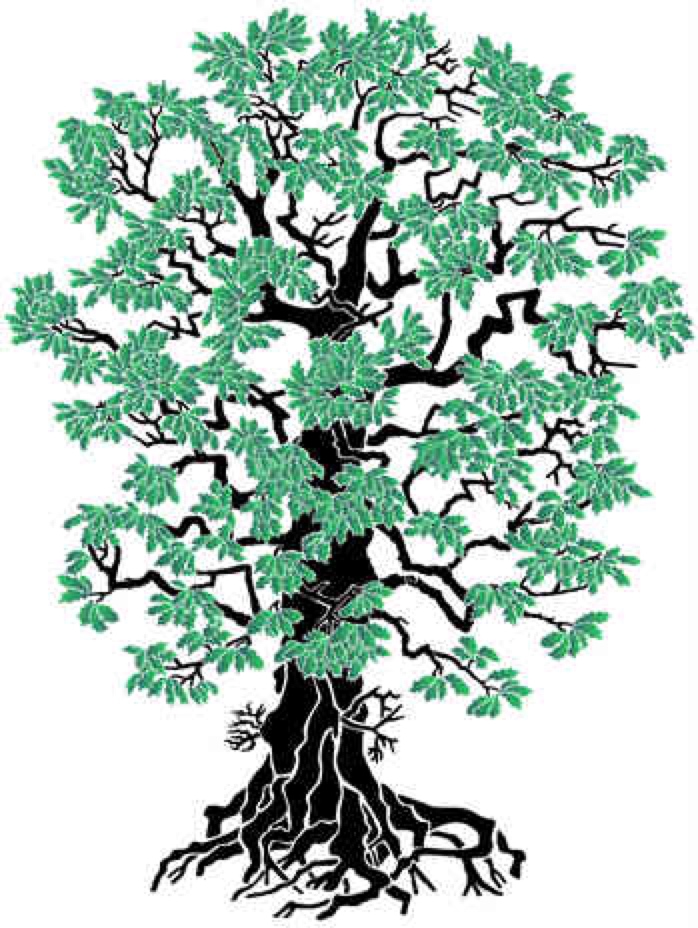
Religion_Tree.jpg
The Tree Model of Religion

Imagine a great tree. There is a large root at the base and a huge trunk that rises up from this central root to spread out into a network of main branches and then into a mass of successively smaller branches. Every part of the tree grows out of this one central root. Now imagine a river. A river is formed when a series of rivulets converge to form streams that in turn converge to form increasingly larger streams that eventually join to form a main waterway.

Hinduism can be imagined to be a large river system. Buddhism, Christianity, Islam and many other religions can be imaged to be great trees. Buddhism, Christianity, and Islam rise up from a single source, a Buddha, a Christ, a Muhammad and then grow out from a few main branches that in turn spread out into many smaller branches. In Christianity there are three main branches that grow off the main trunk of Christ: Orthodoxy, Catholicism and Protestantism. Each of these main branches in turn split off into many smaller branches. In the case of Protestantism, there is the Lutheran branch, the Anglican branch, the Baptist branch, and so on. Similarly, for Buddhism there are the main branches of Mahayana and Theravada Buddhism. For Islam there are the Sunni and Shiia main branches of Islam. The tree model of religion is the way the majority of people think of religion.

watershed pic-smaller
The River Model of Religion

Hinduism, on the other hand, has no single source and does not, therefore, follow the tree model of religion. To think of Hinduism in the same way that one thinks of Buddhism, Christianity or Islam, is a mistake. Hinduism has no single Buddha-like, Christ-like or Muhamand-like founder, who forms the starting point or root. Instead, there are many streams, separate religious traditions, which combine to make a much larger multi-layered and complex conglomeration of traditions. In general there are four major streams that converge and flow together forming what today we call Hinduism: the Shaiva stream, the Shakta stream, the Vaishnava stream and a huge number of folk streams. We often hear that there are 3,333,000 Gods in Hinduism and to the Western mind this seems absurd. Spend just a few hours walking in the streets of any Indian city, town or village and one will meet a dizzying array of Gods and Goddess in street-side temples and shrines. Yet all of these divinities arise from one of these four basic streams. Most Westerners can hardly imagine the complexity of divine manifestations that appear in India. So one might ask how can such a complex mixture of traditions exist with so many Gods and Goddesses without a unifying root. The answer is simple: there is indeed a unifying root, but instead of it being an historical personality, a Buddha, a Christ or a Muhammad, it is a unifying idea. The oldest of Hindu texts, the Rig Veda, gives us the key to understanding the complexity of religious streams that comprise the river of Hinduism:

ekam sat viprah bahudha vadanti (RV 1.164.46)

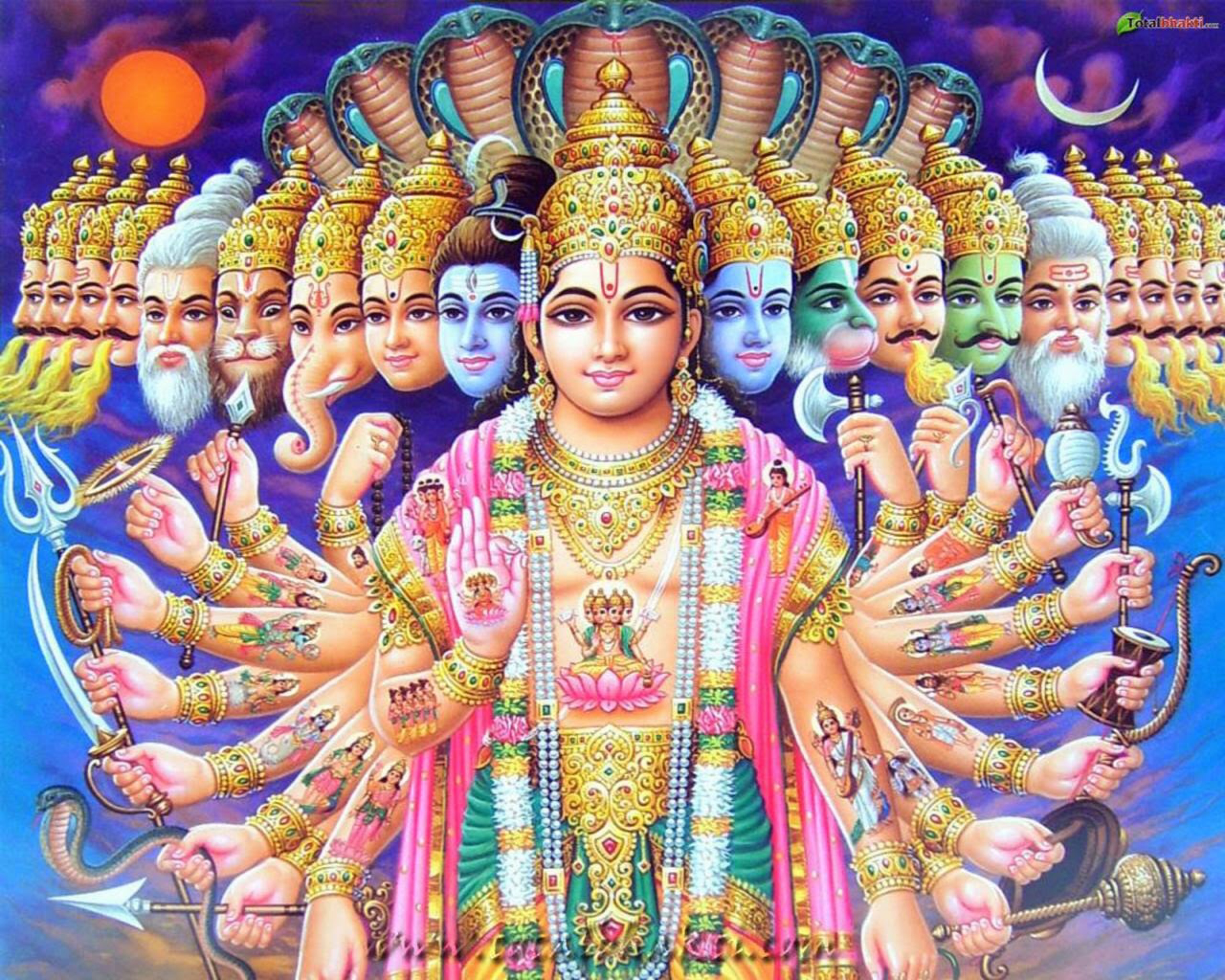
This short and simple verse is profound in its implications. In just five words the vast and seemingly complex world of Hinduism is described. Ekam means “one.” Sat, is “God.” Viprah means “the learned.”Bahudha means “many” and vadanti means “they say.” Thus, “The wise speak of God as One and Many.” This is the key to understanding the Hindu way of seeing virtually everything.

Hindu_Pantheon.jpgThis way of seeing reality simultaneously ranges from plurality to oneness, from polytheism to monotheism and everything in between. When a Hindu enters a temple and sees a dozen different Deities that person sees both diversity and oneness. The plurality of divinities are simply different “faces” or manifestations of the One. Another word that is used in Sanskrit to describe this oneness is purnam, which means complete or full. Thus God by very definition is complete and full; God is all things. This is the oneness, and yet this oneness manifests in an unlimited number of “expressions,” “faces” or “personalities,” the bahudha, the many. These are the Gods and Goddesses of Hinduism. The forms of Vishnu, Krishna, Shiva, Ganesha or of the Goddesses Lakshmi, Sarasvati and Durga are simply multiple faces of the One. This is how most Hindus see the world.

There is a wonderful dialogue in the Brihad Aranyaka Upanishad that illustrates this point. There, a student asks a renouned teacher, how many Gods there are and the answer comes back, “My dear son, there are but 3,306 Gods.” At first the student is happy to hear this answer, but then he wonders why 3,306 and so he returns to his teacher and again asks, “How many Gods there are. This time he is told there are but three Gods! Being satisfied he goes away only to wonder why just three, so he returns and asks again, “How many Gods are there? This time he is told there are two Gods. Again he wonders, why just two Gods? This time he is told there are one and a half Gods! One and a half Gods, he questions? And so he finally asks and is told, “My dear son, there is but one God. Ask no more!” This sublime conversation illustrates the Hindu way of seeing the universe, simultaneous diversity and oneness.

Consequently, when a Hindu enters a church, the form of Christ is simply another manifestation of the One, a bahudha, a many. Similarly, in a synagogue or mosque a Hindu simply sees other manifestations of the One reflected through different cultural perspectives to form the many. Consequently, the almost unlimited religious streams making up Hinduism are unified under the simple idea: ekam sat viprah bahudha vadanti. The Vaishnava worship of Krishna, the Shaiva worship of Shiva and the Shakta worship of Durga are unified through the power of this simple verse. This is how the “river of Hinduism” is held together.

Filed Under: The Origins

February 3, 2014 by admin

The Nature of Religion

Hinduism is perhaps the oldest living religion. In fact, the origins of Hinduism can be traced back to at least 2500 BCE and today there are close to a billion followers. It behooves us, therefore, to ask, “What is Hinduism”? and then to understand how this ancient tradition has managed to survive and even thrive in modern times. Before we do this, however, there is an even more basic question to ask, namely, what is the nature of religion itself? The most common answers go something like: Religion is the belief in God, the soul and an afterlife; religion is a set of rules to regulate how people should act in the world; religion is a series of rituals and symbols that address the psychology of human beings; or religion is a way of life. While all such answers are surely true, they unfortunately limit our ability to understand the true nature of religion and what it means to be religious. Ultimately, such views even impede spiritual growth. Let me explain.

Most people view religion as one thing: A set of beliefs, rituals and behaviors that form a world-view. But instead of viewing religion as one set of things, I prefer to break religion into two constituent parts, namely, faith and a cumulative religious tradition. The first arises from the perception that life is a wondrous mystery, and the second is what results from this perception.

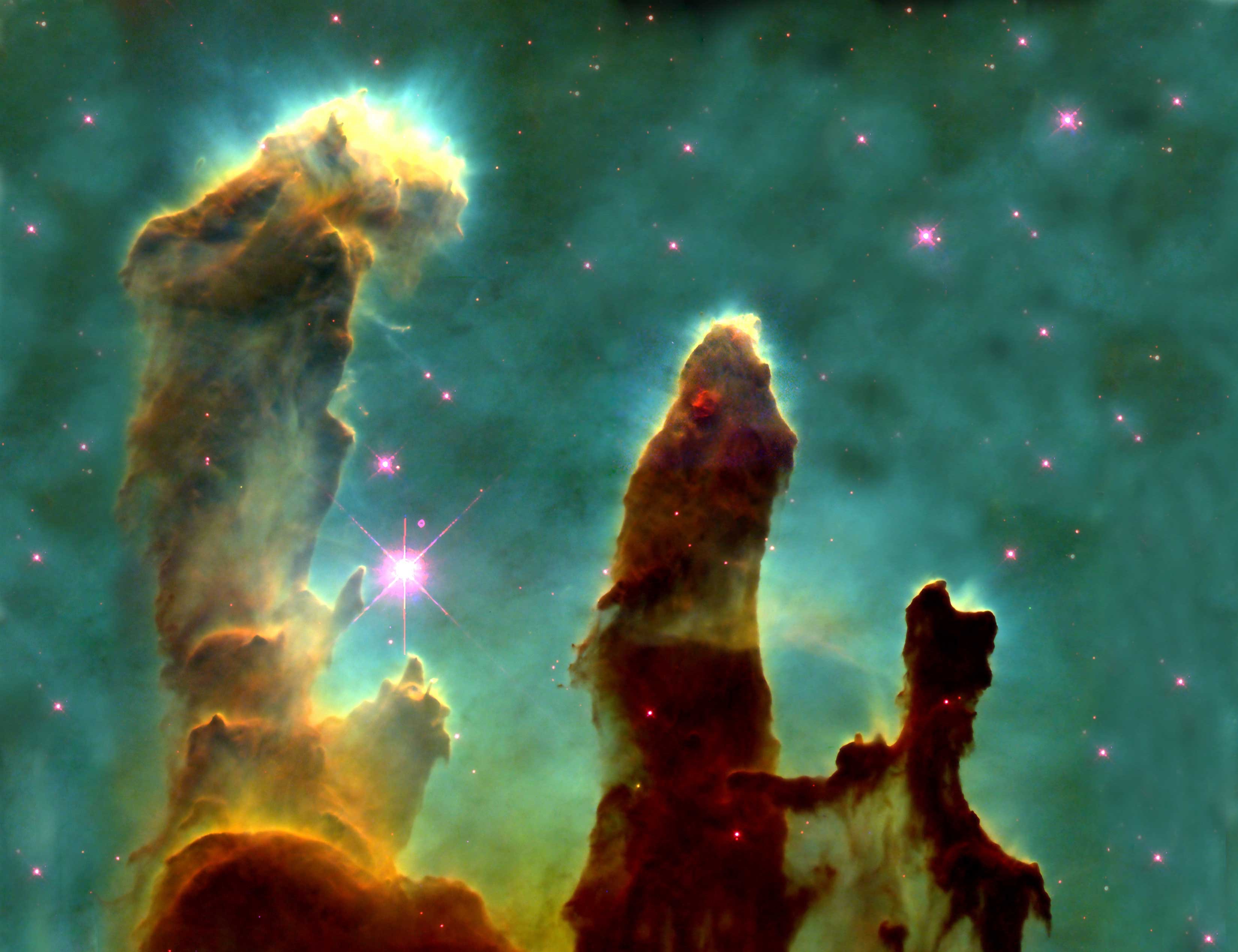
Pillars of Creation
Pillars of Creation

From the earliest times up to the present, human beings from all cultures have looked out at the world and felt deep amazement, a kind of wonder. From the flash of lightning in the sky and the crash of thunder that follows, from the eclipses of the sun and the moon that have caused primitive peoples to run and flee, to the exquisite views of DNA strands that regulate biological life and the amazing images of distant galaxies seen through a space telescope, human beings have constantly been confronted with the wonder and mystery of the world around them. Moreover, this wonder and mystery also confronts us from the negative aspects of life. We call it horror. Death and destruction are a great source of horror. The devastation caused by a powerful earthquake is a great horror to see. Anyone who has ever witnessed death, with the gradual fading of consciousness and the profound silence and coldness that follows, also knows this horror. These horrors indeed have a great impact on human consciousness. Perhaps the most universal response of the human heart toward this wondrous mystery and even the horror of physical reality, has been, and continues to be, a questioning into the nature of reality. Who are we? What is this world? Why is there suffering, and so forth? Implicit within such questioning comes a faith that there can be answers to such questions. This faith takes many forms, one of which is religious faith. In other words, the origins of religious faith lay within the experience of life itself; and so long as there continues to be life, with all its beauty and mystery, and even horror, there will always be faith. Even modern science, which has solved the mystery of lighting, thunder and eclipses, has shown even greater beauties and mysteries that continue to inspire the heart of mankind.


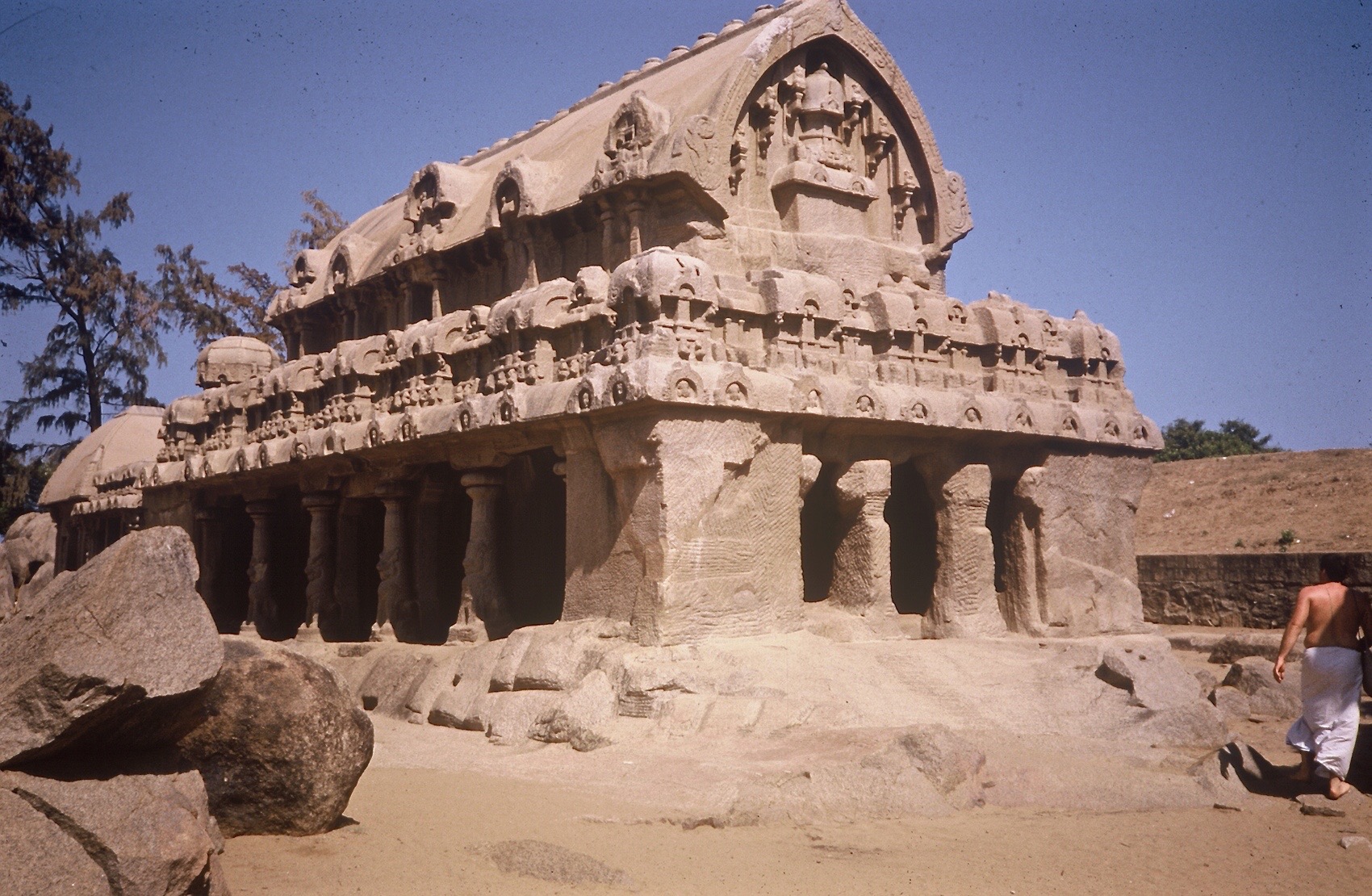
Rock Temple from Mahabalipura near Chenai
An ancient temple curved from a single rock

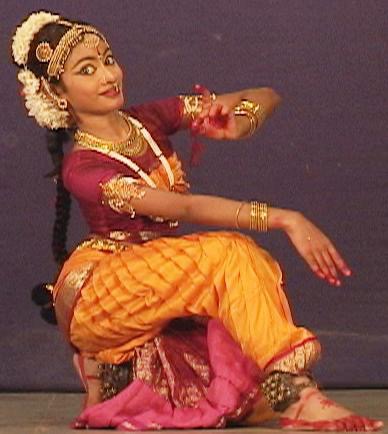
Faith, translated into physical reality, results in an almost infinite variety of religious expressions: architecture, music, dance, dietary laws, dress codes and even belief systems. Religious architecture, for example––churches, mosques, synagogues, and temples––can be looked upon as the projection or translation of faith into physical form. Each of these buildings have their particular architectural styles and they all arise from the collective faith of their worshippers. Similarly, in the realm of religious art, there are unlimited religious expressions beginning from the ancient rock paintings of early man in the caves of France and Spain or the outstanding Islamic designs found in the mosques of Saudi Arabia, or the ancient Greek and Roman sculpture found in the ruins of Athens and Rome. Music and dance are also expressions of religious faith. The requiems of Bach and Mozart, or the Indian dance styles of Kathak and Bharata Natyam are examples of faith projected into the world of music and dance. Even dietary laws, codes of conduct, and forms of dress are projections of this faith. The Jewish and Islamic laws of kosher and halal, the Hindu restrictions against meat and alcohol, or even the use of psychogenic drugs found in many indigenous tribes of North America and Australia are examples of faith translated in terms of dietary laws.

bharatnatyam
Bharata Natya Dance

Projections of religious faith similarly includes many intangible manifestations. In the intellectual realm, religious beliefs: God as Father, God as Mother, the belief in a soul, an afterlife or in reincarnation, are also manifestations of religious faith. In terms of social organization, the Indian caste system or the Christian or Buddhist’s systems of monastic organization are examples of faith translated into the realm of social organization. Taken together, each of these categories of religious expression––architecture, music, dance, dress, dietary laws, belief and social systems––form the cumulative religious traditions of the world, which we commonly call Hinduism, Judaism, Buddhism, Christianity, Islam, and so forth. Consequently, we can speak of Christian faith, Hindu faith, Islamic faith, etc. I use the word “cumulative” because these expressions of religious faith build up or “accumulate” over time. The older a religious tradition, the deeper its layers of accumulated tradition. In common terms, I sometimes think of the cumulative religious traditions as the “stuff” of religion.

creationofadam-sistine-chapel1
God and Adam, Sistine Chapel

Not only does religious faith inspire the religious traditions of the world, faith is also nurtured by these same traditions. Anyone who has ever sat in a cathedral like Chartres or Notre Dame in France or the massive Balaji temple in south India knows the powerful effect of architecture on the human heart. If you have visited the Sistine Chapel in the Vatican and contemplated Michelangelo’s hand of God reaching out to the hand of man on the ceiling that towers above, you may also know the powerful effect of religious art on human faith. Religious faith and religious traditions go hand and hand, and for this reason they seem inseparable, but at the same time, being able to distinguish between the “stuff” of religion and religious faith itself empowers a person and promotes spiritual growth. Failing to distinguish between the two, leads to the mistake of confusing the stuff of religion with the essence of religion. It leads to attachment to the externals of religion instead of to the inner mystical and mysterious origins of religion. Unfortunately, the world is always full of people who miss the essence of religion in the name of being religious and who fight and argue over all aspects of the cumulative religious traditions. Consequently, they impede their own spiritual growth and the growth of those around them. Therefore, as you read this small work that describes the cumulative religious tradition called Hinduism, be aware of the deep and mysterious yearning of religious faith that underlies this tradition and inspires it.

Filed Under: The Origins

  • « Previous Page
  • 1
  • 2
  • 3
  • Next Page »
  • About Us
  • Hindu Primer
  • Biography
  • Translations
  • Articles
  • Vedic Chants
  • Sanskrit

Copyright © 2024 — Sanskrit Religions Institute • All rights reserved. • Privacy Policy • Disclaimer