Sri Deva Sthanam

Where Faith and Scholarship Meet

  • Sri Deva Sthanam
  • About Us
  • Hindu Primer
  • Biography
  • Translations
  • Articles
    • Biographies
    • Sanskrit
    • Astronomy
    • Samskara
    • Vedic Chants
  • Vedic Chants
  • Sanskrit

March 2, 2014 by admin

Liberation: Moksha/Mukti/Nirvana

Samsara
Samsara

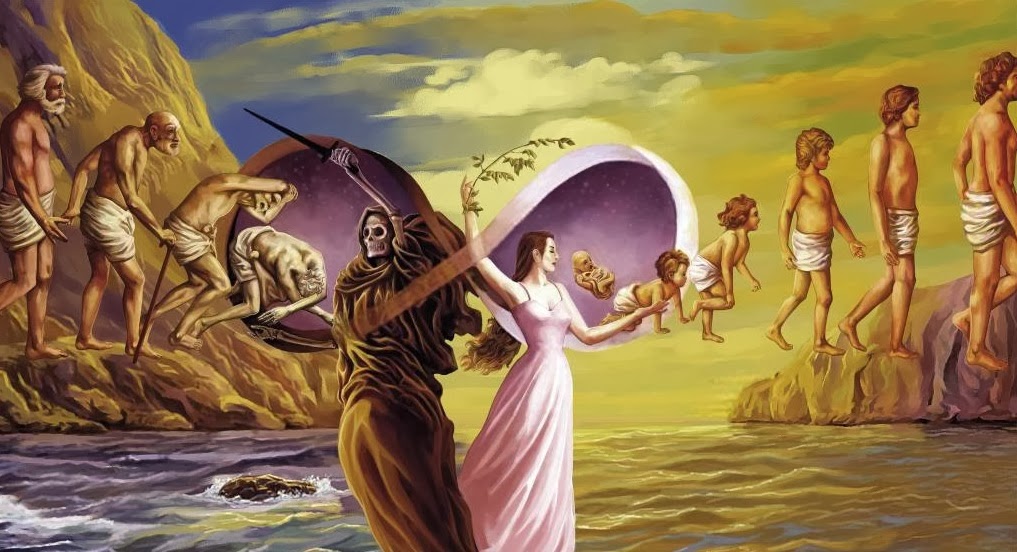
In Hinduism the present life is considered to be the result of many lifetimes of past desires, actions and the results of those actions. The results of these previous actions are unfolding at every moment. Some actions are mature and bearing fruit at the present moment, other actions are laying as “seed” waiting to mature at a future time. All that we have done in the past creates who we are in the present and all that we do in the present is creating who we will be in the future. In this way, there is great cycle of desire, action and reaction that drives the wheel of life, and as a result, all beings are forced to remain within this world in order to experience the fruit of their desires and actions. Sometimes these fruits are called papa and punya. Desire and action are said to be the source of reincarnation. Beings continue to “rotate” through endless lifetimes in this physical world. Sometimes the being is in heaven (nice places), sometimes in the middle regions (medium places) and sometimes in hellish realms. This rotation through endless lifetimes is the process of reincarnation called samsara in Sanskrit. The ultimate goal of life in Hinduism is to break this cycle of reincarnation, to escape samsara. Breaking this cycle is done through the process of yoga, and freedom or liberation from the cycle of rebirth is called moksha or mukti.

A slightly different version of moksha is nirvana. Literally the word nivana means “extinguishing” and in this case it means extinguishing one’s material existence. Sometimes one’s desire which leads to action and reaction is compared to a flame. “The blazing fire of material life,” is an expression sometimes heard. Extinguish or “put out” one’s material existence and one has achieved liberation. This is nirvana. The word nirvana is used more in Buddhism than in Hinduism.
Filed Under: Philosophy

March 2, 2014 by admin

Action: Karma, Punya and Papa

Karma

karmaKarma is a frequently heard word that has entered many Western languages including English. The word karma comes from the Sanskrit root kri meaning “to do.” Karma is action, plain and simple, whether involuntary or voluntary. The beating of the heart, the breathing of the lungs, eating, walking, working, playing; all of these actions are karma. One also hears of good karma and bad karma, which simply refers to actions that lead to positive results or negative results. In Sanskrit, the word for result is “phala,” which means “fruit.” So the fruit of an action can be positive, negative or mixed. Perform the action of robbing a bank and the fruit may be jail. Perform the action of opening a school and the result will be education. Where Hinduism adds an extra dimension to this understanding of karma is that the results of any given karma may not only bear “fruit” in this life, but may also bear fruit in a future lifetime. Similarly, actions performed in a former lifetime may be bearing results in this lifetime. Rob a bank in this lifetime, and you may not get caught and punished in this lifetime, but in some future lifetime you will pay for the crime in some fashion. You may appear to be an inocent person put into jail in the present lifetime, but in fact you are simply paying for a crime comminted in a previous lifetime. If a person has an unexpected win-fall of good fortune in this lifetime it could be the result of some good karma having been performed in a past lifetime.

Punya and Papa

Actions that bear positive results and elevate a person are called punya. Actions that lead to a negative fruit and degrade a person are called papa. Imagine, for example, that every person has a spiritual “ledger” showing accrued punya credits and papa liabilities. A person who wins a lottery must have had a lot of punya accumulated due to many past positive actions. A person murdered must be experiencing the accumulated effects of past papa. In Hinduism people will often consciously attempt to buildup their punya assets and decrease their papa load by performing good actions, avoiding negative actions and even by performing atoning actions to wipe out negative papas. Scripture tells how fasting or giving charity on special days are particularly good for raising puny levels and lower in papa. Attending temple and receiving prasada or performing certain ritual sacrifices (yajnas) are said to even erase the effects of negative actions, papas. One’s position in life, the family one is born into, one’s economic position, one’s health and strength, and even what country one is born into and who one marries are considered to be the result of punya and papa. A person is born into a family of privilege and class as a result of great punya. A person is born into a hellish condition of war and disease as a result of papa. There are said to be heavenly and hellish realms “above and below” this earth that beings are born into as a result of high and low levels of punya and papa. The expression “seventh heaven,” for example, comes from a Hindu idea of heaven. Above this earth there are many levels of heaven and similarly, below this earth there are many levels of hell. The “seventh heaven” is the highest realm, but a heaven and a hell are never permanent. One may go to a heaven as a result of great punya, but once that punya is exhausted through enjoyment, one will move to lower levels of existence. Similarly, one may fall to a hell as a result of great papa, but once that papa is “burned off” through suffering one will begin to raise again to higher levels of existence. Earthly regions are considered middle ground where there is both happiness and suffering and because most actions are neither all good or all bad, the results are mixed. Therefore, our lives are mixed in terms of happiness and suffering.

Filed Under: Philosophy

March 2, 2014 by admin

Hindu Caste: Varnashrama Dharma

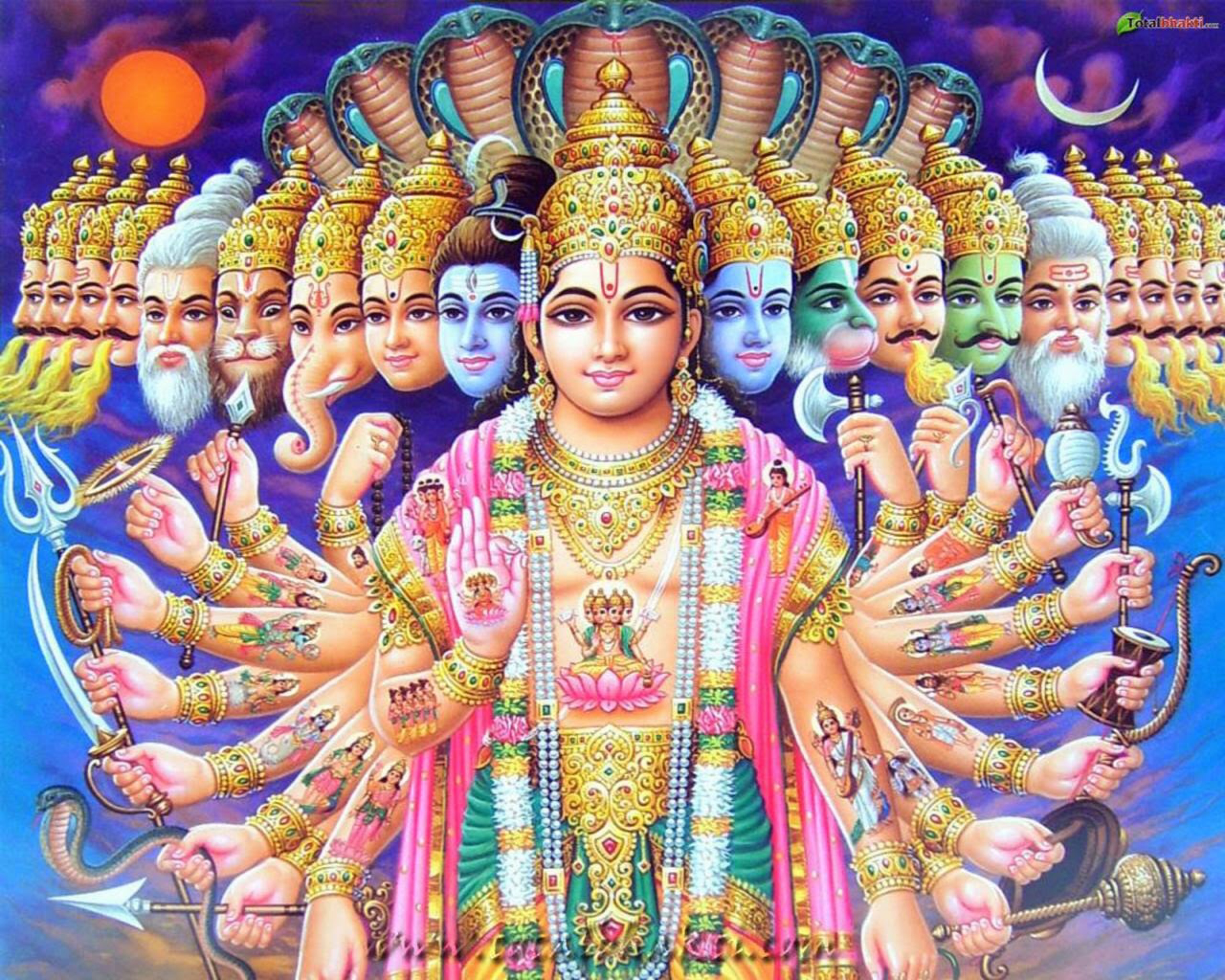
Image of Universal Form
God as the Basis of the Social System

The Varnas

There is a famous verse from the Rig Veda entitled Purusha Sukta, which describes how this physical world emanates from the cosmic body of God, or according to another interpretation, how the physical world is the body of God. This hymn describes, for example, how the moon arises from the mind of God, how the sun comes from the eye of God, how the mountains are His bones, and the trees and grasses are His hair, and so on. It also describes the human social body as an emanation from this same cosmic body. According to this hymn human society is divided into four social grouping called varnas. The word “varna” literally means “color” or “hue.” These four “colors” of men, therefore, represent universal psychological types of mankind. The divine head of this cosmic body becomes the priestly (brahmana) class, the arms of this body become the warrior (kshatriya) class, the stomach, or sometimes the thighs, become the agricultural or merchant (vaishya) segments of society, and finally, the feet of this cosmic form become the worker (shudra) segments of society. In this way, human society is directly related to the cosmic body of the universe. Maintaining the social order is maintaining the cosmic order. This is an act of dharma.

The Ashramas

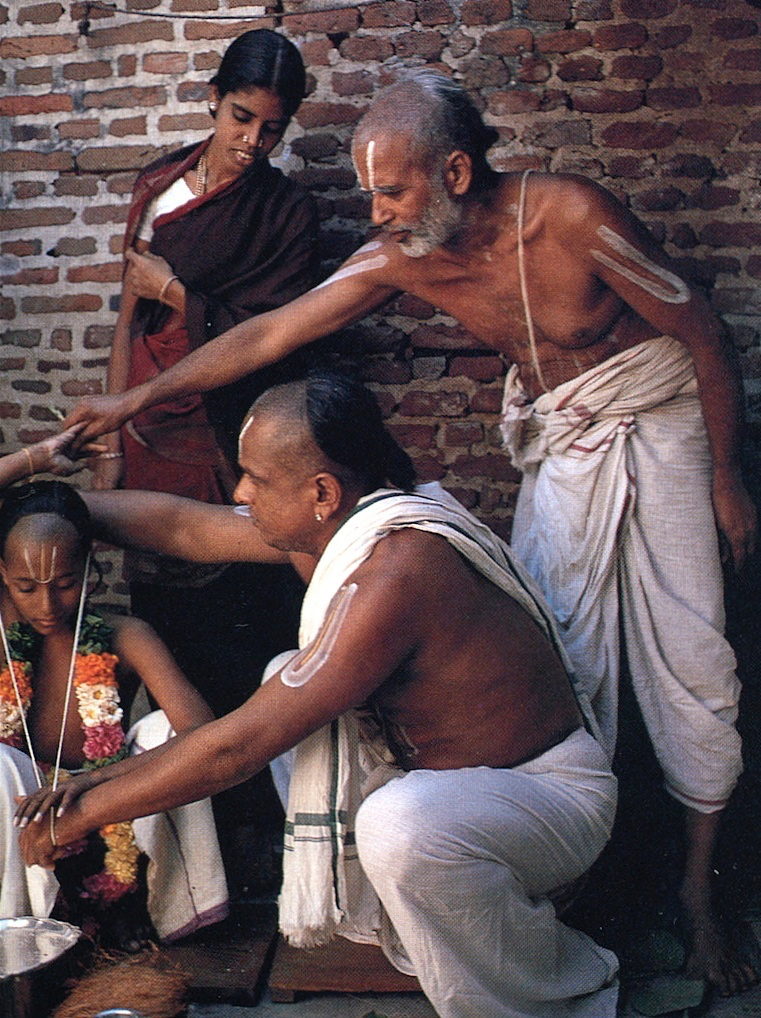
Image of thread ceremony for Brahmana
Becoming a Brahmana

In addition, to these four varnas, the later Smriti Vedas add yet another layer to this system, namely four stages of life called ashramas. As the varnas divide the social body, the ashramas divide the life of an individual. Assuming the life of a human being is 100 years, each stage is afforded 25 years. The first quarter is called the student phase (brahmacharya). During this time of life the individual goes to the home of the guru (guru-kula, the ancient Sanskrit word for school) and lives a life of celibacy serving the teacher and learning what needs to be learned for later years. After graduation the student adopts the next stage of life, the householder (grihastha) stage and takes on worldly responsibilities, which include wife, family and career. By age fifty it is recommended that the householder turn his mind back to the ways of spiritual life as in younger days and so moves into the retirement (vanaprastha) stage of life. In this stage he passes household responsibilities over to his children, leaves home and enters the forest (vana) to be away from the world. Husband and wife remain together, but in a more renounced way. The vanaprastha stage is the gradual winding down of material affairs in preparation for the final stage, complete renunciation or sannyasa. In this final stage of sannyasa a man will send his wife back to his family, symbolically perform his own funeral rites and spends his remaining days as a monk seeking final release (moksha) from the world. This was the model.

Together these two systems of varnas and ashramas are known as Varnashrama Dharma, the ancient social system that was meant to assure spiritual and material prosperity for both society and the individual. The Bhagavad Gita, which is part of the later Smriti Veda, speaks of the varnas as being created by God according to an individual’s qualities and actions and not according to birth. There are many verses that describe the qualities and responsibility of each varna. In other words, an individual’s varna was to be determined by one’s psychological disposition and activities and not one’s birth. For example, an individual who was naturally peaceful, gentle, studious, clean and non-violent had the potential to become a member of the brahmana class. Someone with the qualities of bravery, resourcefulness and leadership had the potential to be a warrior or kshatriya. A person with a natural inclination to do business would be considered a member of the vaishya community, and finally a person without qualities of these three “higher” varnas would be placed as a member of the laboring class and could work for the three higher varnas. In this way, the system of varnas placed individuals in positions that best suited their psychological makeup, and the system of ashramas maintained the spiritual focus of society. This at least was the theory. Reality, however, was quite different.

The Caste System

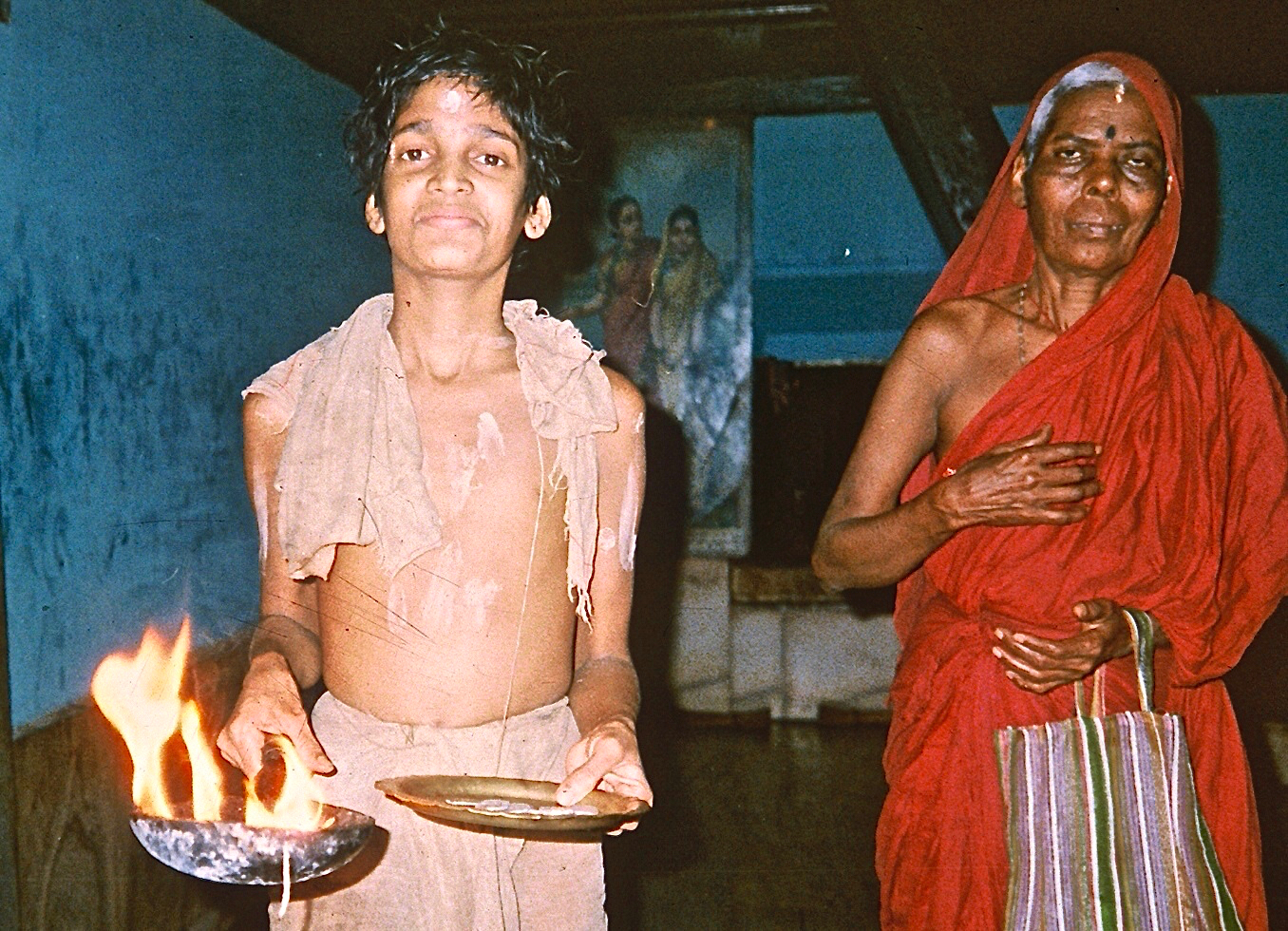
ArtiWidowThe traditional Hindu caste system, although taking its inspiration from the system of Varnashrama Dharma, is based solely on birth and not qualities or action as mention in the Gita. The son of a priest became a priest regardless of his qualities or activities; the son of a warrior became a warrior regardless of his bravery or leadership qualities. The son of a merchant became a merchant regardless of his business abilities. In fact, temple priests of a certain sect formed their own subdivision within this system; priests who did funerals formed another subdivision. There were even brahmanas who became cooks and so formed their own subgroup. Similarly, kshatriyas of different grades distinguished themselves from other kshatriyas; within the business community gold merchants, for example, distinguished themselves from grain sellers, land owners distinguished themselves from other members of the vaishya community, and in this way, the Hindu caste system divided society into a complex array of subgroups (samajas and jats) according to job divisions and birth rights. This was analogous to guilds of ancient Europe.

It is certainly beyond the scope of this primer to examine the Hindu caste system in more detail other than to ask: How is modern Hinduism in the West related to this ancient system of castes or even varnas and ashramas. The answer is simple: modern Hinduism is not dependent on either of these ancient systems. There is no theological or philosophical imperative that demands that modern hinduism conform to these ancient systems. In fact, much of what naturally results from these hierarchical systems would be illegal in a modern democracy. There are special rights and privileges that are awarded to the different varnas that could not be permitted in a modern democracy. It is to the credit of hinduism that it has detached itself from its traditional caste system. This shows its ability to adapt to modernity and the West.

There are, however, some areas where the ancient caste system still operates within modern Hinduism. One is in the area of marriage, another is in the area of work, and the other is in the area of temple priests. Hindu families that are traditionally brahmanas, for example, and who prefer to see their children marry other brahamanas, create brahamana social groups (samajas) to promote and maintain brahamana values. They especially create data bases of prospective marriage partners within the same brahmana caste. In a similar manner, there are merchant groups amongst traditional vaishya families that seek to promote marriage and business relations within the same traditional castes. Within these business communities they will also share business opportunities and employment within their own group to the exclusion of outsiders, including Hindus from other parts of India. And finally, a Hindu temple will generally only hire a traditional caste priest to serve as a temple priest. Hindu congregations generally will only accept a traditional caste priest. They will not accept even one of their own members, who may be extremely devoted, to serve even as an assistant on the altars if they are not from traditional caste brahamana families.

I do see, however, how a general understanding of the original system of varnas and ashramas can serve as a guide for child development and personal spiritual growth. Understanding the psychology of a child can certainly help guide a child into an occupation that suits his or her personal psychology. In other words, the varna model applied to child psychological development can be beneficial. Forcing the son of a doctor to become a doctor when the child may be better suited to perform another occupation, just for the sake of money or family status, has been a prescription for rebellion and unhappiness. We see this within our Hindu communities. Similarly, applying aspects of the ashrama system with its emphasis on spiritual growth can also have beneficial results.

Filed Under: Philosophy

March 2, 2014 by admin

Voluntary Service: Seva

Image of AnnaKuta as Seva
Deity Seva

The word seva comes from the Sanskrit root, sev, meaning to “attend” or “to go towards.” Seva is generally understood to be “service” and mostly it is used in the context of religious service as in the case of a person doing Deity seva by bringing fruits and flower and bowing down before a form of God in a temple. Such seva is actually a form of bhakti-yoga. Another way to look at seva is simply as volunteer service, and in the case of a temple, this could mean polishing copper or silverware, cleaning, or the offering of services such as bookkeeping or architectural skills, and so on. Seva can also be used in reference to philanthropic work such as volunteering to work for civic organizations or hospitals. Another form of seva is guru seva or service to one’s teacher.

Filed Under: Philosophy

  • « Previous Page
  • 1
  • 2
  • 3
  • Next Page »
  • About Us
  • Hindu Primer
  • Biography
  • Translations
  • Articles
  • Vedic Chants
  • Sanskrit

Copyright © 2024 — Sanskrit Religions Institute • All rights reserved. • Privacy Policy • Disclaimer