Sri Deva Sthanam

Where Faith and Scholarship Meet

  • Sri Deva Sthanam
  • About Us
  • Hindu Primer
  • Biography
  • Translations
  • Articles
    • Biographies
    • Sanskrit
    • Astronomy
    • Samskara
    • Vedic Chants
  • Vedic Chants
  • Sanskrit

February 2, 2014 by admin

Introduction

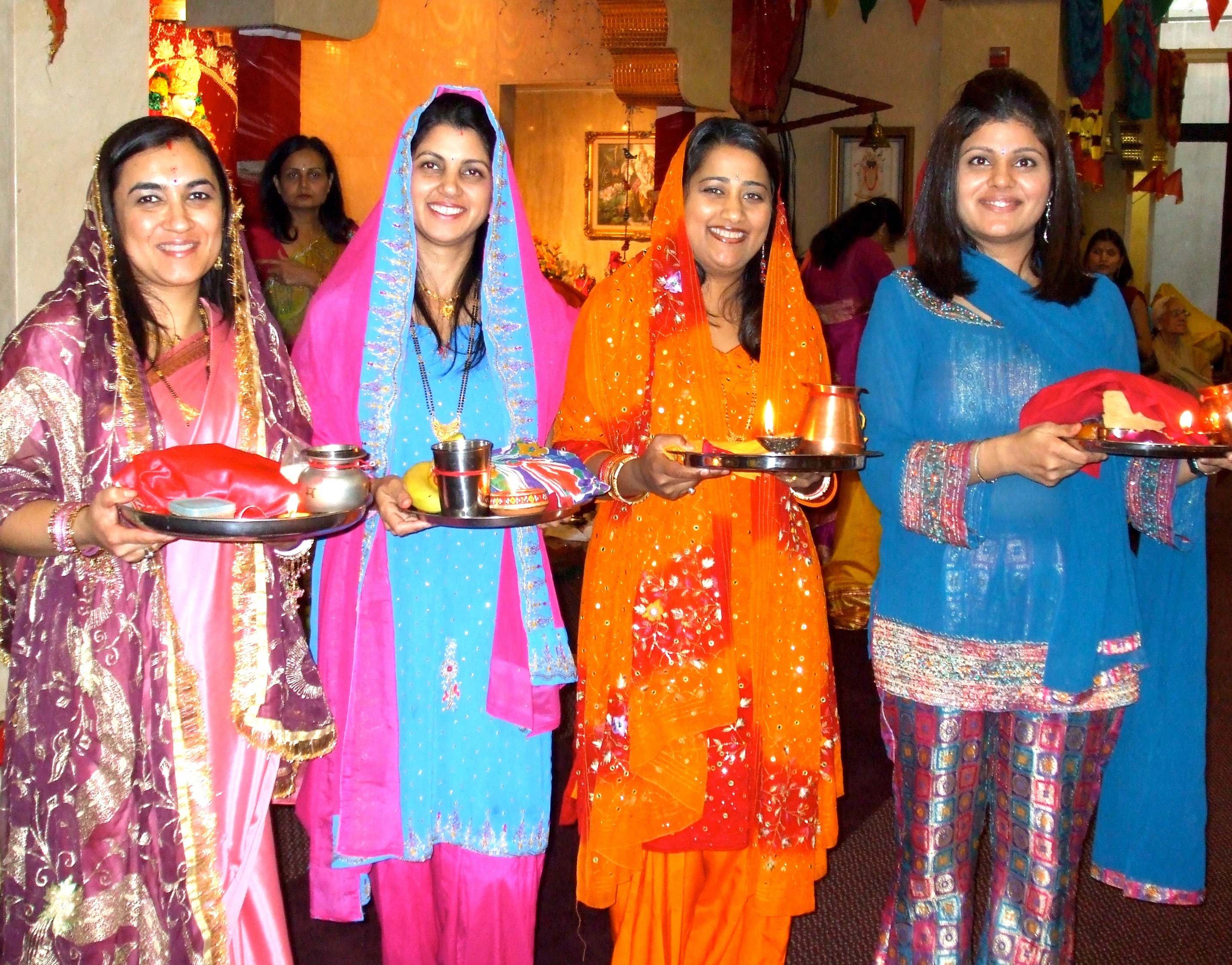
Karwa Chauth Four ladies holding talisAs I prepare this small volume, I do so from two perspectives: from one who has studied and teaches Hinduism academically, and as a priest who ministers to the needs of people. In university, I learned Sanskrit and read the ancient texts of Hinduism. It was the Hinduism of a thousand years ago, but now, as a priest, I experience Hindu religious life from a radically different perspective. Daily, I see the elderly who were born in India and hardly speak a word of English and who only came to the West in their senior years to be with their children who have immigrated here. This is a Hinduism that is completely foreign to the West. I also see their children who have come here as the first generation, and who have established businesses and started families. This is a Hinduism based on what is practical, designed to support the need to make money and live in the West. It is also a Hinduism that reflects the distinct traditions of all regions of India. Now I am even seeing the Western-born children of this first generation. This is the second generation raised on computers, pizza, Western sports and “fast-food” culture. Theirs’ is a Hinduism that has yet to take formal shape, and one that is struggling to find an identity in the matrix of Western culture. Moreover, I see large numbers of non-Hindus who have become interested in Hinduism, having come into contact with these immigrant Hindus and their children through marriage, business or friendships, and I see students and other interested parties coming to our temples out of curiosity or looking for spiritual nourishment. I have, therefore, the fortune of dealing with a large multi-lingual and multi-ethnic base of Hindus and non-Hindus who are striving to establish various degrees of Hindu culture in the West. I have prepared this volume primarily to help the last two groups, the Western-born generation of Indo-Westerners and the emerging Western community, who is interested in Hinduism and our Hindu religious traditions.

I have before me four primers, all of which are acceptable as an introduction to Hinduism and which could easily satisfy the needs of most readers. So why create another introduction to Hinduism? In preparing this Hindu primer I have three specific purposes. First, to provide our readers with a methodology by which to understand religion in general; and therefore, a means to understand this most ancient of all religious traditions. It is not enough to simply tell our readers that we worship many Gods, celebrate certain festivals, fast on certain days or ring bells, as most primers do, but to explain why these things have been done for generations in India and why we may want to continue to do these things in the West, or why we may not want to continue these traditions. Second, I want to help smooth out the process of defining what it means to be Hindu in the West, given the conditions of modernity. To be religious 2500 years ago, 500 years ago, or even 50 years ago in any tradition is not the same as what it means to be religious today. Religion exists in the here and now, and although Hinduism is the most ancient of the world’s living religious traditions, it is still a child in the West, particularly in America. This creates many challenges because there are few long-standing models to follow, which means that all practitioners of this great tradition in the West are pioneers. Finally, and most important of all, this primer attempts to explain how the reader can participate in this tradition and at the same time prosper in a modern society. For every Hindu living in the modern world, a great marriage must take place; namely, the bringing together of the best of modernity with the best of the ancient traditions of Hinduism. This book is intended to facilitate this great marriage.

Filed Under: The Origins

December 12, 2013 by admin

Pancha-samskara

The Process of Initiation

The following discourse is a translation of an article written in Bengali, entitledPanca-samskara, by Kedarnath Datta Bhaktivinoda. The article was originally published in the journal, Sajjana Tosani, (vol. 2/1) in 1885. I have added portions, indicated by square brackets, from a supplementary article of the same title also from Sajjana Tosani (vol. 4/1) published in 1892. Translation by Shukavak N. Dasa

It is said in the sastra that a person who receives panca-samskara can practice two kinds of devotion [1] and gain permanent happiness in the eternal abode ofSri Hari:

avapta-panca-samskaro labdha-dvi-vidha-bhaktikah/
saksat krtya harim tasya dhamni nityam pramodate//
 [2]

Persons who read this instruction with faith will want to understand the meaning of the expression panca-samskara. In order to help them, we will first explain the conventional understanding of the term and then give its deeper significance.

The smrti-sastras explain panca-samskara in the following manner:

tapah pundram tatha nama mantro yagas ca pancamah/
ami hi panca-samskarah paramaikanti-hetavah//

“Tapa, pundra, nama, mantra, and yaga-these five items comprise panca-samskara. They are the cause of intense devotion to Lord Hari.” [3]

When a faithful person learns about panca-samskara, he approaches a religious teacher and humbly requests him for initiation, or diksa. After considering the student’s sincerity, the teacher mercifully gives tapa and pundra to the student in order to sanctify his body. Some religious groups give tapa by marking the student’s body in various places with the symbols of Sri Visnu’s conch, disc, club and lotus using hot iron brands. Other religious groups imprint the name of Hari with clay using a sandalwood stamp. [In reference to tapa the smrti sastrasfurther state:

hari-namaksarair gatram ankayet candanadina/
sa loka-pavano bhutva tasya lokam avapnuyat//
 [4]

“One who marks his body with the syllables of Hari’s name using sandal paste purifies the world and after death attains the kingdom of God.”

[In the Sri Sampradaya of Ramanuja tapa is given by branding the body with the symbols of conch and disc, but Sri Caitanyadeva has instructed that we mark the body with Harinama using sandal paste etc. instead of brands. This rule is a blessing for the souls of kali-yuga.]

Pundra, or tilaka marks, are vertical lines drawn on the body. The sastrasinterpret these vertical marks either as symbols representing the Temple of Hari, or as His footprints. Accordingly each religious group has its own prescription for pundra which is universally accepted within that particular group. [5]

Nama or name is the third samskara. Mercifully the teacher utters the name of Hari into the ear of the faithful student. This name is to be recited daily by the student. [Receiving name means that one understands one’s self to be a servant of Hari. During initiation the teacher also gives a personal name to the student which indicates devotion to Hari. In the Sri Sampradaya of Ramanuja, names like Rama Krsna Dasa, Narayana Dasa, Ramanuja Dasa, etc. are given. In the Gaudiya Sampradaya names such as Sri Govinda Dasa, Sri Nityananda Dasa,Sri Caitanya Dasa, etc. are used. Since the time of Srimad Mahaprabhu names like Ratnabahu, Kavikaranapura, Premanidhi, etc. have been used. Subsequently, even names such as Bhagavatabhusana, Gitabhusana, Bhaktibhusana, etc. are employed.]

The fourth samskara is mantra. Out of his mercy the teacher gives an 18 syllable mantra to his beloved student. [Mantra is the recitation of a short prayer which corresponds to the particular deity one worships. In the worship of Krsna an 18 syllable mantra is given.]

The fifth and final samskara is yaga or deity worship. Using the mantra which he has received from his teacher, the student begins the worship of salagramasila or sri murti, the Deity of Visnu. This is known as yaga. By receivingpanca-samskara, the five sacraments, a faithful person enters into bhajana-kriya or the personal worship of God, which eventually leads to pure love forSri Hari.

When we analyze the stages that lead to love of God, we understand that faith or sraddha is the first stage. Without sraddha, there is no way to obtain love of God. From faith, one seeks saintly association, called sadhu-sanga. This leads to shelter at the feet of a spiritual teacher. Thereafter, panca-samskara or initiation follows. Panca-samskara gives rise to bhajana-kriya or the personal worship of God. Bhajana-kriya leads to anartha-nivrtti, which is the stage where one clears up unwanted things from his heart. After anartha-nivrtti one’s faith can develop and one enters the stage called nistha or mature faith. Fromnistha, taste or ruci develops. This leads to the stage called asakti or deep attachment. From asakti spiritual emotions called bhava spring forth. This eventually ripens into the stage called love of God, prema. Therefore, everyone should seek shelter at the feet of a spiritual teacher and receive panca-samskara, which is the source of bhajana. Without panca-samskara, bhajana is not spontaneous. Instead, it is performed with difficulty.

Some people think that prema or love of God can be obtained without panca-samskara. This is incorrect. The conditioned soul in this world has become hostile to the Divine, and consequently his original spiritual nature has become distorted. As a result he must sanctify himself before his true spiritual nature can develop. And what is the means to attain this pure state? The best way is through samskara or sanctification. Without samskara how can his distorted nature be given up? If we see someone whose nature is not distorted then we think that in a previous birth, through the mercy of a spiritual teacher, he must have received samskara, and on the strength of that samskara he has attained his true spiritual nature wherein prema or love of God has arisen. Otherwise we think that this person has been imperceptibly sanctified by the inconceivable mercy of the Lord Himself. No matter how you look at it, samskara is always there. On the other hand, samskara is not necessary for liberated persons because their nature is not distorted. Distortion of the soul’s original spiritual nature is the cause of his bondage in this world. For this reason, withoutsamskara the life of the conditioned soul is impure. Even if a person has attained prema on account of previous samskara, still in his present life he again receives samskara in order set a proper example for the good of all.

Samskara exists in all religions and in all countries. The purer a particular religion is, the more its samskaras are sacred and complete. Although we have not had the opportunity to thoroughly study the samskaras of all religions, we at least can say that the samskaras of the Aryan religion appear to be of a higher order than the samskaras of other religions. In particular, the samskarasof Vaisnava culture are the best part of the Aryan religion. No other practise is as sacred and complete.

The question arises, “if the practise of samskara found in Vaisnava culture is so good, then why are those who practise it still bound by distorted natures?” The answer is that Vaisnava samskara is the best, but at the present time [6] it is practised in name only. Both the spiritual teacher and the student block their own spiritual advancement by being content with only the external aspects ofsamskara, as I’ve just described. Today, the deeper significance of samskara is not understood. When the student submits himself to the teacher, the teacher gives panca-samskara and then abondons him. What good can come frompanca-samskara of this type? Externally the student looks good, but internally there is nothing. The symbols of divine conch, disc and the name of Hari mark the body. The tongue utters the name of Hari and worship of salagrama sila orsri-murti with mantra is performed, but the student is addicted to endless sinful practises. At night, he takes intoxicants and practises debauchery! Oh good teacher, how have you benefited your student? What is the difference in him before and after diksa? In fact, he is worse. He is a hypocrite. There is no remorse, “I am sinful. It is my fault. How can my sin be given up?” These days no one thinks like this when they take shelter of a spiritual teacher. Sinful activities are performed without the slightest concern. What misfortune!

Why is this? The reason is that the wrong kind of relationship exists between teacher and student. The sastras give rules to guide this relationship, but they are not followed. The student who is burning in the fire of material life, who analyses his predicament and concludes, “My relationship with material nature is not permanent, therefore I must take shelter of a spiritual teacher in order to obtain the feet of God,” has reached the stage of faith and is qualified to take shelter of a spiritual teacher. The teacher should study the student for one year and observe his atonement. This is called tapa. During this examination period the student is encouraged to atone even more and when the teacher is satisfied, he brands the student with the symbols of conch and disc. These marks are permanent and they symbolize the purity that the student must maintain for the rest of his life. This is tapa, the faithful soul’s first samskara. In English we define the word tapa as “repentance, atonement, and the permanent impression of higher sentiment on the soul.” Tapa applies not only to the body, but also to the mind and the soul. If it is only physical, in the form of  branding or stamping, then tapa has not actually taken place and  religious practise becomes hypocritical. At the present time this kind of hypocrisy has weakened Vaisnava culture. Without tapa or inner repentance, the soul cannot live as a Vaisnava. Without tapa the whole process becomes useless. Without tapa the heart remains impure. Therefore good friends, seek atonement without delay!

When the teacher sees that the student has received tapa properly, (in other words, genuine atonement has occurred) then out of his mercy, the teacher gives him urdhva–pundra. What is urdhva–pundra? It is effulgence! It is also known as urdhva-gati, the path of advancement. After receiving tapa the student voluntarily accepts a suitable amount of renunciation from worldly activities. This is the path of advancement. However, if the student accepts no renunciation then his tapa or atonement, is useless. So much trouble! So much asceticism! So much renunciation of one’s happiness! So much work to control lust, anger and greed, but it is all useless labor if one does not perform these austerities in order to obtain Vaikuntha, the kingdom of  God. In other words, by taking shelter of Sat Cit Ananda Lord Hari, a soul follows the path of advancement, urdhva–gati. The illumination of the soul, the mind and the body is called urdhva–pundra. Aversion to material life and attachment to the Supreme Lord is called tapa, and pundra and these two ornaments are absolutely necessary for the conditioned soul. Without urdhva–pundra the body is as good as dead. Realizing this we must bathe in atonement. Withouturdhva–pundra the mind drifts and becomes attached to lowly sense objects and then wastes its time discussing the lowest subjects. O repentant soul! Do not delay, mark the body, mind and soul with urdhva–pundra and follow the path of advancement which leads to the kingdom of God. Without urdhva–pundrathe soul’s real nature is extinguished. Therefore adopt urdhva–pundra.

Seeing the beloved student shining with tapa and urdhva–pundra, the teacher gladly gives nama, the holy name of God that awakens the soul’s eternal nature. The eternal nature of the soul is servitude to the Lord, and by tasting the nectar of the Lord’s holy name the soul is carried to the supreme abode. Then he says, “I am Hari Dasa. I am not the enjoyer of this world. Even Maya herself is eternally connected to Krsna and I must utilize her in the service of Krsna.” The eternal soul is then enchanted by singing the name of Hari. By taking shelter in the nectar of the Lord’s holy name, the soul becomes aware of his own spiritual nature. Intelligent men, always sing the name of Hari! Let the mind always remember the name of Hari. May the soul always be adorned with the name of Hari.

Out of affection, the teacher next gives a mantra that allows his student to easily experience the nectar of the Lord’s holy name. A mantra is a kind of prayer that contains the name of God that is inflected grammatically in the dative case. [7]The mantra also includes certain adjectives that qualify the name of God and allows it to express a particular mood or taste. By giving a mantra the teacher helps his student taste the holy name by selecting a suitable “flavor” for him. When we say “namah”, obeisance to Hari, we employ the 4th or the dative case ending. The dative case expresses the proper relationship between the worshipper, the worshiped and the worship that allows the taste of the holy name to be easily experienced. There is no end to the happiness of a person who has received a mantra. Those who analyze the meaning of the 18 syllable mantra, generally used in the worship of Sri Krsna, know that it is a condensed sampling of the taste available from the Lord. [8] The same also applies to the 24 syllable gayatri  and other mantras that are often used to worship the Lord.[9] Those who have not received a mantra can only speculate about the taste of the holy name, but unfortunately most of their considerations are useless. Therefore you must receive a mantra. Those who have received it consider it to be a most important samskara. There are those who are aware of these principles and yet still are not on solid ground in the matter of worship because they have not received tapa, pundra, nama, and mantra from a qualified teacher. Every subject has its rules and regulations and those who reject the rules and regulations of worship often experience difficulty. Therefore it is said:

sruti-smrti-puranadi-pancaratra-vidhim vina/
atyantiki harer bhaktir utpatayaiva kalpate//

“Devotional service of the Lord that ignores the authorized Vedic literatures like the Upanisads, Puranas and Narada-pancaratra is simply an unnecessary disturbance in society.” [10]

Therefore my friends! With logic and pure reasoning receive tapa, pundra,nama and mantra from a qualified teacher.  Not only will you become happy, but by establishing this divine link with God you will benefit all the people around you.

Out of love the teacher next explains the procedure of yaga or Deity worship to his student. Without Deity worship the conditioned soul cannot advance properly. Even though one has received tapa, pundra, nama, and mantra the soul’s material condition has not fully abated. Only when one has pleased Lord Hari is the soul freed from this material world at the time of death. Therefore, until the end of life, yaga is necessary even for those who have received mantra. Even though one lives in this world without attachment to matter, still there is danger from matter. Therefore, yaga, or the path of Deity worship, is the proper way to deal with matter. Yaga is the procedure of worshipping the Lord by employing all the physical and mental faculties of seeing, touching, smelling, tasting, thinking, discriminating and acting. Utilizing each of these faculties in the worship of salagrama, for example, is a good way to cultivate love of God. Service to Sri Vigraha, the Deity, is called Vaisnava yaga. No matter what our situation, we must live in this world by working. Therefore, a person who has received mantra has the duty to spend his life worshipping God with devotion following the rules of Deity worship. By teaching yaga the compassionate teacher rescues his student from the ocean of material existence.Yaga is the fifth and final samskara. A person without yaga has no life and he is forced to accept the results of his karma. Therefore, one should live in this world as a Vaisnava and engage in Deity worship. A detailed explanation of the principles of Deity worship is offered in the book Sri Caitanya-siksamrta in the discussion under vaidhi-bhakti. [11]

I have now explained both the conventional understanding and the inner significance of the expression panca-samskara. But still one question arises. “Why do teachers not give this kind of instruction to their students today?” The answer is that due to the degenerative effects of time, man’s understanding about the role of the spiritual teacher has become extremely corrupt. Today people take instruction from kula-gurus, hereditary family teachers or similar such persons, and therefore they are unable to take shelter of a qualified teacher. It is said in the sastras that the seriously inquisitive student must approach a spiritual teacher who has attained shelter and faith in the Vedas and God, and surrender to him.

tasmad gurum prapadyeta jijnasuh sreya uttamam/
sabde pare ca nisnatam brahmany upasamasrayam//
 [12]

When one surrenders in this way, the material ocean diminishes to the size of a calf’s hoofprint. However, if that surrender is in name only, then it is pointless. At the present time most people do not want the shelter of a genuine teacher because very few want to solve the problems of life. However, it is the responsibility of the living soul in this world to search for a teacher and solve these problems. The Lord reveals Himself to the serious student as a teacher to rescue him. It is good to have a strong desire for a teacher, but it is wrong to accept just any person simply to satisfy one’s desire. A genuine teacher will come to one who is sincerely searching, but before the student accepts the teacher he should also examine him for one year. Without examination the teacher-student relationship is only a disturbance.

After close study we conclude that without proper acceptance of panca-samskara the conditioned soul cannot develop intense devotion to Sri Hari. Therefore panca-samskara is extremely necessary.

Copyright © Sanskrit Religions Institute 2003.
All rights reserved.

[1]. Devotion is of two kinds, namely viddhi-bhakti, devotional service performed according to rules and regulations and raganuga-bhakti, devotional service performed by following the moods of Krsna’s Vrindavan associates.

[2] .Prameya Ratnavali (by Baladeva Vidyabhusana) 8/5.
[3] . Prameya Ratnavali 8/6.
[4] . Prameya Ratnavali 8/6.
[5]. For more information about tilaka see A. W. Entwistle’s work, Vaisnava Tilakas, published in the International Association of the Vrindavan Reasearch Institute’s bulletin, number 11 and 12 1981-2.
[6]. The late 19th century, Bengal.
[7]. Such as Krsnaya or Ramaya.
[8]. The 18 syllable Gopala mantra is one example.
[9]. The kama-gayatri, used by Gaudiyas, is one example.
[10]. Bhakti-rasamrta-sindhu 1/2/101.
[11]. The original text of this article used the future tense, indicating that the book Sri Caitanya-siksamrtahad not yet been published.

[12]. Srimad-Bhagavatam 11/3/21


Filed Under: Samskaras

December 12, 2013 by admin

Sanskrit Terms

Sanskrit Terms

Here is a list of terms along with a summary of their meanings that I suggest should be learned and remain un-translated by students of Hinduism. These are terms taken primarily from the Bhagavad-gita and the Upanisads.

acarya–traditional teacher or theologian of Hindu doctrine, head of sampradaya or school of religious thought.

adharma–the opposite of dharma. Mostly the term is used in the sense of unrighteousness, impiety or non-performance of duty.

artha–wealth, not to be understood solely as material assets, but all kinds of wealth including non-tangibles such as knowledge, friendship and love. Artha is one of the four purusarthas or “goals of life” the others beingdharma, kama and moksa.

asat–opposite of sat, non-being, impermanent, false, evil, unreal, sometimes used to refer to matter or to the body.

atman–has many meanings in Sanskrit that include: soul, breath, the Self, one’s self (as a reflexive pronoun), mind, body, the Supreme Soul, etc.

bhagavan–literally one possessed of bhaga. Bhaga means fame, glory, strength, power, etc. The word is used as an epithet applied to God, gods, or any holy or venerable personality.

bhakti–love, devotion. One of the most common forms of yoga.

brahman–derived from the Sanskrit root brmh meaning to grow, to expand, to bellow, to roar. The word brahmanrefers to the Supreme Principle regarded as impersonal and divested of all qualities. This form of brahman is sometimes designated as nirguna-brahman, brahmandevoid of qualities. In contrast there is saguna-brahman,brahman invested with qualities. (See saguna-brahman).Brahman is the essence from which all created beings are produced and into which they are absorbed. This word is neuter and not to be confused with the masculine word Brahma, the creator god. Brahman is sometimes used to denote the syllable Om or the Vedas in general.

brahmana–a member of the traditional priestly class. Thebrahmana was the first of the four varnas in the social system called varnasrama-dharma. Literally the word means “in relation to brahman.” A brahmana is one who follows the ways of brahman. Traditionally a brahmana, often written as brahmin, filled the role of priest, teacher and thinker.

deva–derived from the Sanskrit root div meaning to shine or become bright. A deva is therefore a “shining one.” The word is used to refer to God, a god or any exalted personality. The female version is devi.

deva-nagari–name of the writing script in which Sanskrit and Hindi are usually written.

dharma–derived from the Sanskrit root dhr meaning to hold up, to carry, to bear, to sustain. The word dharmarefers to that which upholds or sustains the universe. Human society, for example, is sustained and upheld by the dharma performed by its members. For example, parents protecting and maintaining children, children being obedient to parents, the king protecting the citizens, are acts of dharma that uphold and sustain society. In this context dharma has the meaning of duty. Dharma also employs the meaning of law, religion, virtue, and ethics. These things uphold and sustain the proper functioning of human society. In philosophy dharma refers to the defining quality of an object. For instance, liquidity is one of the essential dharmas of water; coldness is a dharma of ice. In this case we can think that the existence of an object is sustained or defined by its essential attributes,dharmas.

guna–quality, positive attributes or virtues. In the context of Bhagavad–gita and Sankhya philosophy there are threegunas of matter. Sometimes guna is translated as phase or mode. Therefore the three gunas or phases of matter are:sattva–guna, rajo-guna and tamo–guna. The word gunaalso means a rope or thread and it is sometimes said that beings are “roped” or “tied” into matter by the three gunasof material nature.

Isa–literally lord, master, or controller. Isa is one of the words used for God as the supreme controller. The word is also used to refer to any being or personality who is in control.

jnana–derived from the Sanskrit root jna, to know, to learn, to experience. In the context of Bhagavad-gita and the Upanisads, jnana is generally used in the sense of spiritual knowledge or awareness.

kama–wish, desire, love. Often used in the sense of sexual desire or love, but not necessarily. Kama is one of the four purusarthas or “goals of life,” the others beingdharma, artha and moksa.

karma–derived from the Sanskrit root kr meaning to do, to make. The work karma means action, work, and deed. Only secondarily does karma refer to the result of past deeds, which are more properly known as the phalam or fruit of action.

ksatriya–a member of the traditional military or warrior class. A king, a prince. The ksatriya was the second varnain the system of varnasrama-dharma.

moksa–liberation or freedom of rebirth. Moksa is one of the four purusarthas or “goals of life,” the others beingdharma, artha and kama.

nirvana–blown out or extinguished as in the case of a lamp. Nirvana is generally used to refer to a material life that has been extinguished, i.e. for one who has achieved freedom from re-birth. The term nirvana is commonly used in Buddhism as the final stage a practitioner strives for. The word does not mean heaven.

papa–literally papa is what brings one down. Sometimes translated as sin or evil.prakrti–material nature. In sankhya philosophy prakrti is comprised of eight elements: earth, water, fire, air, space, mind, intellect and ego. It is characterized by the threegunas: sattva, rajas and tamas. Prakrti is female. Purusais male.punya–the opposite to papa. Punya is what elevates; it is virtue or moral merit. Papa and punya generally go together as negative and positive “credits.” One reaps the reward of these negative or positive credits in life. The more punya one cultivates the higher one rises in life, whereas papa will cause one to find a lower position on life. Punya leads to happiness, papa leads to suffering.

purusa–man, male. In sankhya philosophy purusadenotes the Supreme Male Principle in the universe. Its counterpart is prakrti.

purusottama–comprised of two words: purusa + uttamaliterally meaning “highest man.” Purusottama means God.

rajas–the second of the three gunas of matter. Sometimes translated as passion, the phase of rajas is characterized by action, passion, creation, etc.

saguna-brahman–brahman invested with quaulities. An example of this would be an avatara of Visnu come to this world and appearing to be invested with such qualities such as name and form. In contrast to saguna-brahman isnirguna-brahman. (See brahman).

sankhya–calculating, enumeration, analysis, categorization. Modern science can be said to be a form ofsankhya because it attempts to analyze and categorize matter into its constituent elements. Sankhya (long first a) refers to an ancient system of philosophy attributed to the sage Kapila. This philosophy is so called because it enumerates or analyses reality into a set number of basic elements, similar to modern science.

sastra–an order, command, rule, scriptural injunction, sacred writings, science, any department of knowledge.

sat–being, good, virtuous, chaste, the third word of the famous three words: om tat sat, refers to what is truely real, eternal and permanent, used to mean God or the soul.

sattva–the first of the three gunas of matter. Sometimes translated as goodness, the phase of sattva is characterized by lightness, peace, cleanliness, knowledge, etc.

satyam–truth. The word satyam is formed from sat with the added abstract suffix ya. Sat refers to what is true and real. The abstract suffix ya means “ness.” Thus satyamliterally means trueness or realness.

sloka–a hymn or verse of praise, a stanza or verse in general, a stanza in anustubh metre (the most common metre used in Sanskrit consisting for 4 lines of 8 syllables), fame.

sudra–a member of the traditional working class. Thesudra was the fourth varna in the system of varnasrama-dharma.

tamas–the third of the three gunas of matter. Sometimes translated as darkness, the phase of tamas is characterized by darkness, ignorance, slowness, destruction, heaviness, disease, etc.

tyaga–abandonment, renunciation, the performance of actions without attachment to the results of action.

vaisya–a member of the traditional mercantile or business community. The vaisya was the third varna in the system of varnasrama-dharma.

varnasrama–the traditional social system of four varnasand four asramas. The word varna literally means, “color” and it refers to four basic natures of mankind:brahmana, ksatriya, vaisya and sudra. The asramas are the four stages of an individual’s life: brahmacarya(student), grhastha (householder), vanaprastha (retired) and sannyasa (renounced).

vijnana–derived from the prefix vi added to the nounjnana. The prefix vi added to a noun tends to diminish or invert the meaning of a word. If jnana is spiritual knowledge, vijnana is practical or profane knowledge. Sometimes vijnana and jnana are used together in the sense of knowledge and wisdom.

yoga–derived from the Sanskrit root yuj, to join, to unite, to attach. The English word yoke is cognate with the Sanskrit word yoga. We can think of yoga as the joining of the atma with the paramatma, the soul with God. There are numerous means of joining with God: through action, karma-yoga; through knowledge, jnana-yoga; through devotion, bhakti-yoga; through meditation,dhyana-yoga, etc. Yoga has many other meaning. For example, in astronomy and astrology it refers to a conjunction (union) of planets.

yogi–literally one possessed of yoga. A yogi is a practitioner of yoga.


Filed Under: Sanskrit

July 18, 2013 by admin

Sri Vaishnavism and Ramanuja

Ramanuja Acharya
(1017-1137 A.D.)

Page 1–Ramanuja and Sri Vaisnavism

Note: In India there are many schools of Vaisnavism, and they are generally named after the particular founder that initially propounded them. Consequently, there is the Vaisnavism styled after Madhva, Nimbarka, Vallabha, Caitanya, Ramananda, Jayadeva, Jnanesvara, and so on. Each of these different schools of Vaisnavism has adapted itself to meet the local religious, social and language conditions where they developed. Together these schools form what has been called the bhakti movement of medieval Hinduism. Ramanuja’s particular form of Vaisnavism is the oldest of these schools and is often termed Sri Vaisnavism in order to distinguish if from that of Madhva and the other Vaisnava schools.

_______________________

The story of Ramanujacharya is actually the story Sri Vaisnavism in India. Unlike Madhva or Caitanya, who can justifiably be called the founders of their particular school of Vaisnavism, Ramanuja is not the founder of SriVaisnavism. Instead, he is an important member among a great succession of followers who trace themselves to the time of the Rg-veda. The school is known as Sri Vaisnavism because Sridevi, otherwise known as the Goddess Laksmi, is said to be its original propounder. In this system Sridevi holds an important theological position alongside Vishnu, and together they form the basis of ultimate reality. The descriptive name for the philosophy of SriVaisnavism is Visistadvaita.

The development Sri Vaisnavism can be divided into five historical periods: 1) the Vedic period 2) the period of the Agamas 3) the smrtis period 4) the period of the Alvars 5) and the period of the theologians (acaryas) including Sri Ramanuja.

The Vedic Period

Sri Vaisnavas argue that the philosophy, which underpins the Vedas, is monotheism. When the hymns of the Rg-veda address Indra, Agni, Vayu, Varuna, and any other devata, they are not intended for the particular deity, but for a Supreme Being who is the inner soul (antaryamin) for that deity. The various deities addressed in the hymns are simply different “faces” of this one Supreme Being. Despite its polytheistic appearance, the religion of the Vedas is, therefore, fundamentally monotheistic.

The hymns of the Rg-veda not only assert the existence of this one Supreme Being, but also describe the essential characteristics of this Being as the cause of all causes (sarva-karana), [1] the controller of all (sarva-niyamaka),[2] as immanent in the heart of every being (antaryamin), [3] as the ruler of the entire universe, [4] and as the giver of immortality. [5]   Such a Being is also described as omniscient (sarvajna), omnipotent (sarva-sakta), full of unsurpassed glory (sarvatisayi) and the greatest of all (sarva-mahima).

Above all the deities mentioned in the Vedas, Sri Vaisnavas identify Visnu as the original or prime face of this one Supreme Being, who is the foundation of the world and the gods. They quote numerous verses from theRg-veda and other Vedic texts to substantiate their position. [6] Perhaps the most important verse that is cited to establish the supremacy of Visnu above all others is the one that mentions the eternal abode (parama-pada) of Visnu: “As the blazing sun pervades the entire sky like an eye fixed in the heavens, so the divine seers eternally perceive that supreme abode of Visnu.” [7]Other mantras are also cited that identify Visnu as that Supreme Being, including the Purusa-sukta [8] which is regularly chanted during worship. In this way, Sri Vaisnavas trace their philosophic origins to the earliest Vedic period and assert that Sri Visnu is the foundation of ultimate reality.

The Period of the Agamas

Next to the Vedas there is another set of sacred literatures that Sri Vaisnavas call upon, not so much for their philosophic roots, but more for their religious and ritual importance. These are the Agamas. The date of the Agamas, like the Vedas, is in dispute between traditional and modern scholars and varies from 3000 BC to 800 AD. In general, however, we can safely say that theAgamas fall somewhere between the time of the Vedas and the smart literatures including the Mahabharata. The Vaisnava Agamas fall under two categories: Vaikanasa and Pancaratra. The Vaikanasa Agamas are derived from the sage Vikhanas, who, with the help of his disciples, was their compiler. Vikhanas claims to have taken his teachings directly from the Vedas. The Pancaratra Agamas claim to be based on the Sukla-yajur-veda (which is no longer extant) and also purports to be of Vedic origin. The Pancaratra Agamas, in particular, are extremely voluminous. The number of texts is in the hundreds, but the most ancient and authoritative Pancaratra texts are the Sattvata, Pauskara and Jayakhya Samhitas.

In general, the Vaisnava Agamas describe Visnu is the Supreme Being and the foundation of all existence. They describe the consecration of sacred images (murti-sthapana), the practice of image worship (murti puja), the building of temples, the observance of specific daily rituals and other festivals in these temples. Because of the emphasis on image worship, many scholars take the view that the Agamas are not Vedic in origin, but are representative of another tradition of ancient India known as the Sattvata orBhavavatas tradition. [9] Although there is much debate over this issue, there is little doubt that the Agamas are at least pro-Vedic and have had a major influence on the religious development of Sri Vaisnavism.

The Smrti Period

The next phase of Sri Vaisnava development comes from the later Vedic texts, the so-called smrti texts. These include the Ramayana, Mahabharata,Puranas and the Vedanta-sutras. The smrti texts naturally include theBhagavad-gita, which is a part of the Mahabharata. Sri Vaisnavas consider the Ramayana, the oldest and most authoritative of the smrti texts. TheRamayana describes how Visnu Himself incarnated on earth and played the role of a human being. The text describes the greatness of the Goddess Laksmi through the character of Sita and the devotional attitudes of service and surrender to God illustrated in the characters of Hanuman, Vibhisana, Laksmana and Bharata. For Sri Vaisnava the Ramayana is often called thesaranagati-sastra because it best shows the way of surrender to God  (prapatti), which is a key feature of Sri Vaisnava philosophy.

Next in prominence comes the Mahabharata, which is considered the encyclopedia of Vaisnava philosophy and religion. In the Mahabharata the single identity of Vasudeva, Narayana, Visnu and Krsna is established. The supremacy of Visnu over other deities including Siva and Brahma is also established. The Bhagavad-gita, as part of the Mahabharata, outlines the principals of karma, jnana, and bhakti yogas and like Ramayana teaches surrender to God (prapatti).

Among the eighteen Puranas, Sri Vaisnavas acknowledge the Visnu-puranaas the oldest and most authoritative. For them it presents the basic philosophic and religious foundations of Sri Vaisnavism. Later schools of Vaisnavas lay more emphasis on the Bhagavata-purana instead of theVisnu-purana.

The Period of the Alvars

 Sri Vaisnavism does not, however, base its authority solely on the Sanskrit Vedas, Agamas and smrti texts, but also on the Tamil writings of the Alvars. The twelve Alvar saints were born in different parts of south India and appear to span the dates 200 AD to 800 AD. Orthodox tradition, however, places the earliest Alvar saints at 4203 BC and the latest at 2706 BC.

The Alvars were mystic saints who immersed themselves in devotional experiences and expressed their divine experiences in Tamil verses that have been collection into 4000 stanzas call the Divya-prabandha or Divine Hymns. These sacred writings contain rich philosophical and religious material taken from the Upanisads, the Ramayana, Mahabharata and thePuranas and are accepted by many Sri Vaisnavas to be on par with the Vedas themselves.

The main teachings of the Alvars assert 1) that Sri Visnu along Sridevi forms the basis of ultimate reality 2) that self-surrender (prapatti) through acts of devotion (bhakti) is the means to attain salvation (moksa) 3) that service to God and godly souls is an essential duty for Vaisnavas 4) and that moksa or salvation from rebirth is the supreme goal of life.

Amongst the 4000 verses of the Divya-prabandha, the 1102 verses attributed to Namma Alvar are often considered the most important and are sometimes called the Tamil Veda. Based on the teaching of the Upanisads, these verses have inspired their own set of commentaries and sub-commentaries and have played a major role in the development of SriVaisnavism down to the present day. You may select the following link to hear a sampling of these hymns recorded in Malkote in 1986.

The Period of the Acharyas

The next stage in the development of Sri Vaisnavism brings us to more recent times (1000 AD) and is the development brought about by the acharyas or principal theologians amongst the Sri Vaisnavas. Three principleacaryas are named: Nathamuni, Yamuna and Ramanuja. By the time of the acharyas at the beginning of the ninth century, Sri Vaisnavism had to contend no only with rival philosophic and religious systems that included Buddhists, Jainas, Saivas, Sankhyas, Nyayikas, Vaisesikas, Mimamsa, but also the school of Sankara, advaita-vedanta. In order to defend the teachings of SriVaisnavism from these religious and philosophic schools there was an urgent need to consolidate and systematize Sri Vaisnavism as a coherent philosophical system and formal religious organization. This was the work of the acharyas, among which, the works of Ramanuja are the most comprehensive and well known.

Born in 824 AD, Nathamuni is the first of this group of theologians. Unfortunately his works are no longer extant. We only know of them through the references of Ramanuja and his later follower, Vedanta Desika. Nathamuni is most famous for having revived and edited the 4000 hymns of the Alvars. He was the one who arranged them into four sections and introduced their recitations as part of daily temple worship. Nathamuni also appears to have advocated the Alvaric doctrine of prapatti.

The next great acarya is Yamunacarya, who was the grandson of Nathamuni. Yamuna is also known as Alavandar. Born in 916 AD, he produced six major works that outline the principals of visistadvaita. His writings are the first extant works in Sanskrit by a Vaisnava acarya. In his writings he argues for the supremacy of Sri Visnu as the basis of ultimate reality and makes the case for the ontological status of Sri Devi, which in later Sri Vaisnavism became a topic of divisive controversy. Yamunacarya has also argued for the authority of the Agamas and like Nathamuni he promoted the doctrine of self-surrender (prapatti). Yamunacarya’s writings are today considered the starting point for Ramanuja’s great systemization ofvisistadvaita.

The Life of Sri Ramanujacarya

Like Madhvacarya, Ramanuja was born during a time when Sankara’sadvaita-vedanta had become a dominant philosophical force. In Sankara’sadvaita-vedanta ultimate reality is impersonal and devoid of qualities (nirguna). Advaita-vedanta in effect subordinated the personal God of the Vaisnavas to this impersonal reality. The Alvars and the acaryas, on the other hand, could not accept that ultimate reality was impersonal and devoid of qualities. Ramanuja’s mission was, therefore, to diminish Sankara’s teaching and to establish, on stronger logical foundations, the philosophy ofSri Vaisnavism. This was done primarily on the basis of the Upanisads,Bhagavad–gita and the Vedanta–sutras.

Ramanuja’s biographers inform us that he was born in the village of Sriperumbadur in 1017 AD. (See the photo of the temple established at this site.) Today this village is about 20 km north of Chennai (Madras). See the side map. Ramanuja received his upper level education, together with his cousin Govinda Bhatta, from the Advaitin teacher, Yadava Prakasa. Just prior to studying with Yadava Prakasa, Ramanuja had been married and so it is estimated that he would have been about age 16 at this time.

As with Madhvacarya and his teacher, Ramanuja’s biographers describe how he often disagreed with Yadava Prakasa over the interpretation of variousUpanisads verses. Yadava Prakasa interpreted the verses in a monastic way, whereas Ramanuja wanted to understand them a devotional way. We are told that the disputes became so intense that Yadava Prakasa apparently plotted to have Ramanuja drowned while on pilgrimage to Allahabad. Apparently Ramanuja’s cousin, Govinda, got wind of the plot and allowed Ramanuja to escape unharmed. Later Ramanuja was reconciled with his teacher and resumed his studies.

We are also told how Ramanuja’s great learning and objections to Yadava Prakasa monastic views caught the attention of Yamunacarya in Srirangam. Yamuna traveled to Kanci to observe Ramanuja in secret to see if he was fit to become his successor. Evidently Yamuna was pleased with what he saw and decided that Ramanuja should become his successor. Eventually Ramanuja fell-out with Yadava Prakasa and left for good. On hearing of this break-up, Yamuna sent one of his disciples, Mahapurnam, to bring Ramunaja to Srirangam. But as fate would have it, Yamuna died before Ramanuja could reach Srirangam.

It is said that Ramanuja was taken to the body of Yamuna for a final look at the great master when he noticed that three of Yamuna’s fingers were folded into the palm of his right hand. On inquiring, Ramanuja was told that the master had three unfulfilled wishes. Ramanuja understood that this was a sign left by Yamuna and pronounced the following three vows. 1) I vow to enter the Vaisnava faith and devote myself to the task of uplifting humanity by teaching the doctrine of surrender to God (prapatti). The first of Yamuna’s fingers opened. 2) I vow to collect the teachings of the Vedas and the acaryas into a commentary on the Vedanta-sutras and place the means of salvation within the reach of all. The second of Yamuna’s fingers opened. 3) I vow to perpetuate the name of Parasara Muni who, in the Visnu Purana, has revealed the position of God, His relation to the souls of this world and the path of liberation. The final finger of Yamuna opened. His hand was now wide-open.

Ramanuja was soon initiated into Sri Vaisnavism by Mahapura according to the panca-sanskara rites. (Select the link for an explanation of the panca-sanskara ceremony.) Sometime later Ramanuja relinquished his family life and became an ascetic (sannyasi). By this time he was about age 32. Afterwards he sought further initiation from Gosti Purna, another follower of Yamuna. Ramanuja’s biographers tell us that it took Ramanuja successive attempts before Gosti Purna would accept him for initiation. In the end Gosti Purna initiated Ramanuja into what was then the most secret and sacred of Vaisnava prayers, the eight syllable (astaksari) mantra: om namo narayanaya. The story goes that immediately after initiation Ramanuja proceeded to climb the temple tower at Tirukkottiyar and call this mantra and the teaching of Gosti Purna out to anyone who would listen. On hearing of this Gosti Purna became furious and condemned Ramanuja to hell. Ramanuja readily accepted, saying that if the sacred teachings of Gosti Purna could elevate everyone to the state of salvation (moksa), he would gladly sacrifice himself. On hearing Ramanuja’s explanation Gosti Purna blessed him. He had passed the test.

This point in Ramanuja’s life is really the beginning of his long life as a philosopher and preacher within the school of Sri Vaisnavism. He was now 40 and he was to spend the next 80 years preaching and writing SriVaisnava philosophy.

Ramanuja’s fame quickly spread far and wide. He soon undertook a tour to North India where he visited many the sacred places including Kashi, Kashmir, Badrinath, and even Puri. In Jagannatha Puri we are told how he tried to change the Deity worship from the rituals based on advaita-vedantato the Vaisnava pancaratra system, but was rejected from the temple for his attempt. On his return to the south he visited Tirupati where he found theSaivas and the Vaisnavas quarrelling with one another over whether the image of God in the Tirupati temple was a form of Siva or Visnu. Ramanuja again intervened in temple affairs and proposed that they should leave it to the Deity Himself to decide. The priests were told to leave the ornaments of both Siva and Visnu at the feet of the image and wait outside all night. In the morning, when they opened the doors, they found that the image was wearing the ornaments of Visnu. This decided that the temple was Vaisnava and it has remained so ever since.

Ramanuja finally returned to Srirangam where he settled permanently and continued to preach and write. Daily hundreds of people flocked to him to hear his lectures. By now he had a following of over 700 sannyasis and thousands of followers, who revered him as their guru. He had converted thousands of people to the path of devotion. He was now seventy years old and what would have been the end of a long career for most people was just the beginning for Ramanuja. He was destined to live many more years.

About this time the Chola king, Kulothunga I, came to power. He turned out to be a ruthless follower of Siva and tried to convert his kingdom to Saivism under the threat of force. When he ordered Ramanuja to subscribe to his faith or be prepared to face the consequences, Ramanuja called on two of his best disciples to go to the king and work out a compromise. They argued for tolerance but the monarch refused to consider their request and had their eyes put out.

As a result, Ramanuja was forced to flee to the Western Ghats, forty miles west of Mysore. There, after great difficulties, he established himself in the Mysore kingdom where he spent the next 22 years of his life in exile away from his beloved Srirangam.

The king of Mysore, Bhatti Deva of the Hoysala dynasty, was pleased to have Ramanuja in his kingdom and readily became his disciple. Thereafter, Ramanuja was allowed to construct Visnu temples in and about Mysore. In particular he constructed a temple at Melkote and created an active Vaisnava community that is still thriving today. (See photos.) Ramanuja’s labors were successful and his followers grew until they numbered hundreds of thousands in the Mysore kingdom.

Meanwhile, Kulothunga Chola 1, who had persecuted Ramanuja, died. The followers of Ramanuja at Srirangam immediately requested him to return. Ramanuja himself longed to go back to his followers in Srirangam and worship in the temple there. Buthis disciples at Melkote and other places in the Mysore kingdom would not let him go. So he constructed a temple for himself, installed his own image for worship by his disciples, and left for Srirangam.

Back in Srirangam his friends and disciples welcomed him. The successor to Kulothunga Chola I was favorable to Ramanuja so he was left undisturbed. During his final stage of his life Ramanuja completed is famous Vedanta-sutra commentary the Sri-bhasya.Through his Sri-bhasya he established the monotheistic principles of Sri Vaisnavism and opposed the philosophy ofSankara. He proclaimed to the world the doctrines of devotion and surrender to God (bhakti and prapatti). Ramanuja stands as an important milestone in the history of not just Sri Vaisnavism but Vaisnavism in general. The great Vaisnava teachers that succeeded him, Madhva, Nimbarka, Vallabha, Caitanya are indebted to Sri Ramanuja. In Srirangam Ramanuja continued his labors for another 22 years and finally closed his long career after attaining the remarkable age of 120 years.

[1] RV VI.7.6 and X.5.7.

[2] RV III. 20.4 and IV.30.2.

[3] RV VI.9.5. and VI.9.6.

[4] RV VI.36.4

[5] RV VI.7.7 and I.154.5.

[6] RV I.156.4, Taittiriya Aranyaka, 1.8, RV VII 99.1 and 2. RV 1.22.18.Satapatha Brahmana 1.1.2 and 1.4.2.

[7] RV 1.22.20: tad-visnoh paramam padam sada pasyanti surayah

diviva caksur atatam/ tad-vipraso vipanyavo jagrvamsas samindhate/ visnor yat paramam padam//

[8] RV X.90. The purusa-sukta is found in all the four Vedas and is therefore mentioned in the Pancaratras and the Puranas as the most important Vedic hymn. Surprisingly, the name of Visnu is not mentioned anywhere in the hymn, but still Vaisnavas universally take it as an address to Visnu.

[9] See Dasgupta, Surendranath, A History of Indian Philosophy volume III pp.14-20 for a discussion on this point.

Shukavak N. Dasa

Bibliography

Aiyangar, S. Krishnaswami; Chariar, Rajagopala; and Rangacharya, M, Sri Ramanujacharya: a sketch of his life and times and His Philosophical System, with an account of Ramanuja and Vaishavism. Madras: G. A. Natesan, 1911? (Microfiche)

Ramakrishnananda, Swami, The Life of Sri Ramanuja. Madras: Sri Ramakrishna Math, 1965.

Srinivasa Chari, S. M. Visistadvaita Vedanta. Delhi: Motilal Banarsidass, 1998.

Rangachari, Dewan Bahadur, The Sri Vaishnava Brahmans. Delhi: Gian Publishing House, 1986.

Dasgupta, Surendranath, A History of Indian Philosophy, Volume III. Delhi: Motilal Banasidass, 1975.

“Ramanuja.”  Encyclopedia Britannica 2003  Encyclopedia Britannica Premium Service.

30 Jan, 2003 http://www.britannica.com/eb/article?eu=64159.

Srinivasa Chari, S. M. Vaisnavism, Its Philosophy, Theology and Religious Discipline. Delhi: Motilal Banarsidass, 20

—-


Copyright © Sanskrit Religions
Institute 2003
All rights reserved.

Ramanuja

Ramanuja Acarya

Ramanuja’s Dates Year Age
Birth 1017 0
Study with Yadava Prakasa 1033 16
Arrival at Srirangam to see Yamuna 1043 26
First Initiation 1049 32
Second Initiation    1057 40
Flight to Mysore to escape persecution   1096 76
Conversion of Bittadeva    1098 78
Establishing temple at Malkote 1100 80
Stayed in Malkote until 1116 96
Return to Shri Rangam 1118 98
Completed Sri-bhasya 1117-1127 97-107
Death 1137 120

Filed Under: Ramanuja Acarya

  • « Previous Page
  • 1
  • …
  • 18
  • 19
  • 20
  • 21
  • 22
  • …
  • 33
  • Next Page »
  • About Us
  • Hindu Primer
  • Biography
  • Translations
  • Articles
  • Vedic Chants
  • Sanskrit

Copyright © 2024 — Sanskrit Religions Institute • All rights reserved. • Privacy Policy • Disclaimer