Sri Deva Sthanam

Where Faith and Scholarship Meet

  • Sri Deva Sthanam
  • About Us
  • Hindu Primer
  • Biography
  • Translations
  • Articles
    • Biographies
    • Sanskrit
    • Astronomy
    • Samskara
    • Vedic Chants
  • Vedic Chants
  • Sanskrit

March 2, 2014 by admin

What is Vedanta?

Vedanta is a form of Hindu theology based on the combined interpretations of three sacred sources:

1. Upanishads
2. Bhagavad-gita
3. Vedanta-sutra

In spite of what common opinion says, there is no such a thing as “thee” Vedanta theology. Instead there are widely divergent interpretations of Vedanta, all of which may be called Vedanta theologies. There are, however, three distinct classical interpretations of Vedanta based on the writings of:

1. Shankara Acharya 788-820 CE
2. Ramanuja Acharya 1017-1137 AD
3. Madhva Acharya 1238-1317 AD

Of these three, Shankara is the most well known and so his particular interpretation of Vedanta is commonly understood to be “thee” Vedanta. This is not true and the other two theologians, although not as well known, are no less important in the history of Hindu theology and therefore should be appreciated. I would also add that these three great teachers should be placed on par with Aristotle, Socrates and Plato.

Each of these classical interpretations of Vedanta theology has been named according to their type of interpretation. Respectively they are:

1. Advaita Vedanta (Shankara)
2. Vishishtha Advaita Vedanta (Ramanuja)
3. Dvaita Vedanta (Madhva)

You will notice that the names of these theologies all center around the word ‘dvaita’ which means ‘duality.’ Therefore, starting from the most recent theologian, Madhva Acharya, his interpretation of Vedanta is called Dvaita. He is often depicted with two finger held up suggesting duality. According to this interpretation he asserts that the nature of reality is dual, meaning that this universe is comprised of two distinct principles, namely, God and everything else. By contrast, Shankara Acharya, the most ancient theologian of the three, has an interpretation called Advaita, non-duality, which asserts that nature of reality is not dual, but one. Shankara’s depiction often shows him holding only one finger up. According to Shankara there is only one ultimate ‘thing’ in existence, namely God. Shankara’s interpretation creates an obvious problem–that if everything is ultimately God, then why do we not know this? One may naturally think, “I certainly do not feel like I am God, nor does the table in front of me seem to be God and my dog is certainly not God!” Shankara’s answer to this question is simple. Everything is God, but the reason you do not perceive this fact is because your ‘seeing’ ability is obscured by illusion (maya) due to ignorance. Remove this illusion through knowledge and you will perceive that all things are God, hence Advaita. Shankara and Madhva have diametrically opposed interpretations of Vedanta.

Ramanuja’s interpretation lies between these two interpretations. According to Ramanuja the nature of reality is ultimately non-duality (advaita), but with a qualification (vishishtha). Thus his interpretation of Vedanta is called Vishishtha Advaita (qualified non-duality). The nature of the qualification is significant. Ramanuja asserts that three distinct ‘things’ exist in this world, namely, God, soul and matter and yet one does not exist without the other. As a unity they are one (advaita) and yet because they are distinct in their essence, this unity is qualified (vishishtha). In a certain way we might say that Ramanuja’s interpretation of Vedanta is something like saying that reality is both dual and non-dual at the same time. Indeed, Ramanuja’s theology has created many derivative interpretations by later theologians who have tried to capture his idea in their own words. For example there is dvaita-advaita (dual and non-dual), shudha-advaita (purified non-duality) and even achintya-bheda-abheda (inconceivable difference and non-difference.

The followers of Shankara’s school commonly assert that these are not different interpretations of the Upanishads, the Gita and Vedanta Sutras, but simply different levels of the same Vedanta theology, the highest being the advaita interpretation. Ramanuja and Madhva, of course, would reject this understanding and say that Shankara’s interpretation is outright wrong. The topic of Vedanta is a vast subject matter that I have barely touched upon, but if the reader wishes to pursue the matter this short explanation will serve as a basis for further study.

 

Filed Under: Philosophy

March 2, 2014 by admin

Hindu Architecture: Vaastu Shastra

We often hear devout Hindus say, “Hinduism is more than just a religion; It is a way of life.” While members of other religions also say the same thing––few devoted people want to think their religion is not a way of life––there is actually some justification for the Hindu statement. We can say this because Hindu culture has never fully separated its so-called “secular side” from its religious side, something that has taken place in many other religions as a result of the secularizing influence of modernity. We have noted this fact in reference to astrology. Hinduism still includes, not only religion, but also astronomy, astrology, grammar, mathematics, law, medicine, politics, diplomacy, war, love, architecture and many other branches of knowledge. In this way, Hinduism is holistic. It is not just about theology.

Vaastu Shastra

It is popular in many Western countries to hear about the ancient Chinese system of Feng Shui, which attempts to align the energies of the physical world with the life of man. The branch of Hindu learning that includes these ideas is called Vaastu Shastra, Hindu Architecture. In Sanskrit the word “vaastu” means a building or structure and so the expression “vaastu shastra” is the science of structure. Like Vedic astrology, vaastu is a vast and highly developed branch of learning and in this installment I can describe only the most basic principles of this subject. There are, of course, whole books devoted to this wonderful subject and an interested reader is encouraged to study these books, especially if one is planning to build or buy a home, commercial building or land for construction.

Hindu Architecture addresses two kinds of buildings: religious structures––temples and shrines––as well as non-religious structures, civic buildings, business complexes and residential homes. In Hindu culture, not only is the home and family important, but so is the actual building where the family lives. Consequently, how a physical building is designed and constructed is a matter of deep concern. Hindu traditions tell us that there are forces, some subtle and others not so subtle, some positive and some negative, around us at all times, and like the Chinese system of Feng Shui, it is in man’s interest to arrange his life to take advantage of the positive forces and avoid the effects of the negative ones. It has been observed that through the proper orientation of a building and other techniques, the positive forces can be focused in a way that will lead to an increase in wealth, happiness, and harmony for the residents of such a building. Conversely, the wrong orientation of a structure and other architectural failures can cause unhappiness, disease and troubles for the inhabitants. The same can be said for other buildings including temples, businesses and civic structures.

In our discussion on astrology, we pointed out some of the essential principles of Hindu theology that affect not only astrology, but many other subjects of learning, including Hindu architecture. The first idea is that the world is a manifestation of the body of God or, more precisely, the world is the body of God. A sacred structure such as a temple is designed to be not just the home of God, but the actual body of God. The building is sacred because it is the Deity directly. The second principle concerns the relationship between the macrocosm and the microcosm. According to vaastu a structure like a temple or a home is to be constructed as a miniature version, a microcosm, of the greater universe, the macrocosm. If this is done properly one and take advantage of positive forces within the universe.

The Divinities that govern direction

Hindu architecture always begins by laying the cosmic body of God (purusha) over every building site (mandala). This is called the Mandala Purusha. The accompanying diagram illustrates this and shows how this cosmic body is positioned in relation to the site. Notice that the head of “God” lays in the northeast corner. The basis behind this orientation is the principle of maximization of light that is described by the metaphor: the sun equals light, which equals knowledge, which equals consciousness and ultimately spiritual enlightenment. The east is the source of light and of all the points along this eastern axis the north-east point is the most important because it is the point of maximization of light. On June 21st of every year the sun rises in the north-east and this is the day when daylight is longest and darkness is shortest. There is maximization of light at this point and so the north-east corner is called God’s corner (isha-kona). The cosmic head, which is a symbol for enlightenment, is placed in the northeast. It is perhaps a little crude to mention, but notice where the cosmic anus is located. Ancient Hindu culture includes everything! This is the position reserved for the negative forces of the universe, personified as demons. The south-west corner, which is the exact opposite of the north-east corner is not considered an auspicious place and so when arranging a home one should avoid placing the meditation, kitchen, or financial areas in this place.

In addition to the sun, there are, of course, many other powerful forces that affect the life of man, and so these forces have also been considered in Hindu architecture and given their respective places. One of the most common features of Hinduism is its tendency to personify all things and so these forces are personified as Gods and given their proper “seats” in the various directions of Hindu architecture according to how they are positioned in the macrocosm, the greater universe. See the accompanying diagram that illustrates the sitting places of these powerful forces. Agni, the god of fire, sits in the south-east corner and so this is the ideal direction for a kitchen. Kuvera, the god of wealth sits in the north, so this is the best place for keeping financial matters. In this way, knowing the places of these forces, the next illustration shows the basic arrangement of how any building should  be designed to create an alignment with the forces of the universe. This is the basis of Hindu architecture. Beyond this there are, of course, a large number of details. Below I provide just a few details found in Vaastu Shastra along with my explanations (in italics) to help the reader get an idea of how the system of vaastu works. Exactly how a building is designed will vary greatly according to the site and the needs of the family in the case of a house for example. There is a lot of flexibility built into this system of architecture.

*No garbage should be dumped in the north-east corner of the site or the building. The reason for this is obvious: the northeast corner is God’s corner.*Lawns and gardens with small plants should be grown in the northern and eastern side. Large trees should only be planted in the south and western sides, never in the east and north-eastern sides. The east is the source of spiritual power and so this energy should never be blocked or obstructed. Blocking the southern direction blocks death. In addition, planting tree in the south and west provides cooling shade against the hottest positions of the sun.*Beds should be placed so that when one sleeps the head is directed towards the south, east, or west, but never towards the north. A person’s body is a tiny magnet with a north and south pole. One’s head is the north pole. The universe is also a magnet (a very big magnet!) with a north and south pole. Polaris, the north star, is the north pole of the universe. Place two magnetic poles together and there is a repulsion. So to sleep with one’s head in the directions of the universe’s head is the same as placing two north poles together. There is repulsion. Therefore sleep will be better when the head is placed towards the south or another direction other than north.*Main doors should open to the east, north or west, but never to the south.

The east is the source of divine light and therefore this is the preferred placement for the main door of a house. The south is the direction of the God of death and so a main doorway should not open to death.*The site should be higher in the west than in the east. By sloping slightly to the east the site is open to the east, the source of divine light. In addition, a slope provides for water drainage.*The staircase should be located in the south, west or south-west corner. The stair or elevator area is not considered useful living space so these things are relegated to less important areas of the building.*A Kitchen should be located in the south-east corner, but may also be in the north-west corner. In either case the cooking area should allow facing east while cooking. The south-east the the place given to the fire divinity, Agni. A kitchen involves fire, so the placement is obvious. The cooking fire is a miniature sun and therefore light, so facing the cooking fire and facing east while cooking is facing light.*A Kitchen should never be in the south-west because it will endanger the health of residents. Notice that the south-west is the the place of the cosmic anus, so placing the kitchen in this location is not favorable for health. Instead the south-west is the proper place for toilets, garbage and storage of things like tools.*The site should be square or rectangular. Sites with triangles, round shapes, with five corners or more, or having odd shapes should be avoided. Symmetry is the basis of Hindu aesthetics, Odd shapes “confuse” or otherwise obstruct the flow of energy and create an imbalance of energy. A shape such as a triangle does away with one whole flank of energy.*The treasury should never be located in the west or south-west. The deity of wealth resides in the north and so the financial part of a house should be in this position. As we have noted, the south-west is the place of negative energy, so one should avoid subjecting wealth to negative energy.*The meditation area ideally should be in the north-east, but should never be in the south-west. The north-east is God’s corner and the south-west is for less positive things. The placement for meditation is obvious.Finallly, here is a sample home design that conforms to the principle of Vaastu Shastra. I provide this just to give a simple idea on how a building can be designed. There can be many many such designs.What I have described in this short discussion on Vaastu Shastra is only a basic outline of what is a detailed and complicated subject. In spite of this, I have provided the essence of the subject matter as far as residential homes are concerned. There can be endless designs and there are many ways to adjust the designs and even design methods and pujas that can be performed to settle or neutralize problems and defects in the site and even in existing homes.

Filed Under: Miscellanea

March 2, 2014 by admin

What is a Guru?

Guru as Teacher
Guru as Teacher

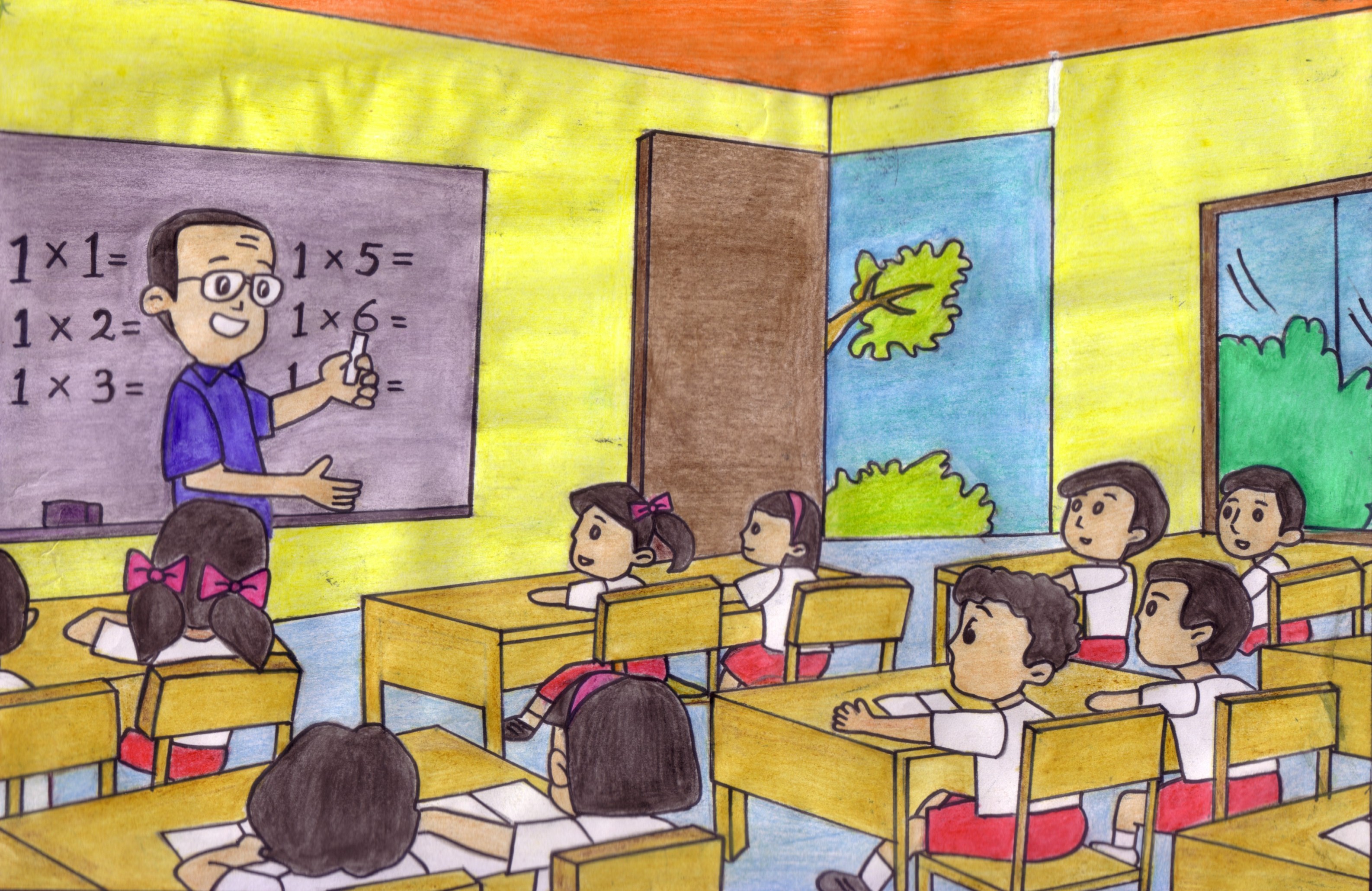
The idea of a guru is a misunderstood concept within Hinduism. Literally, the word guru means “heavy”. Thus a guru is a person heavy in knowledge, a teacher. In this sense a school-teacher is a guru, a coach or athletic instructor is a guru, a fine-arts or even a dance teacher is a guru. One’s parents are also gurus. In the religious field, where the word is most commonly used, a guru is a Hindu religious teacher. So a priest or any person learned in Hindu lore may be a guru. The main purpose of the guru is to teach. In the popular mind, however, there are many stereotyped images of what a guru looks like or how that person acts. Usually long hair, beards, flowing robes and lots of bowing followers come to mind, but if we just keep the idea of a teacher forefront we will not be confused.shutterstock_79006174-Guru

Sometimes we hear of different kinds of religious gurus. There is an initiating guru (diksha guru), an instructing guru (shiksha guru), and even the “guru within” (chaitya guru). An initiating guru is a person who formally accepts a student into a religious order or sampradaya. This kind of guru gives a mantra and other articles of initiation in a ceremony called diksha. The instructing guru is the teacher who actually trains the student. Sometimes the instructing guru and the initiating guru are the same person. The guru within is said to be the “wee” voice of God within the heart that tells a person how to act, and so on. Conscience might be the best word to describe this type of guru. In fact, it is considered that God is the original guru and all other forms of guru represent this one original guru. The expression “eternal guru” (sat guru) is often used to indicate God as the original guru.

Within Hinduism a guru is given great respect, even to the point of offering worship (guru puja). One full-moon each year (during July/August) is even called the Guru Purnima and is dedicated to the worship of guru. To have a guru who acts as the master is an essential part of spiritual growth and so to feel respect for and to want to honor one’s guru is natural and healthy. However, there is a tendency within Hinduism for the development of guru “cults” where the worship of guru supersedes the worship of God. This generally takes place when the original idea of guru as teacher becomes diminished and is replaced by the idea of guru as “blesser.” To be blessed by a guru is considered the greatest thing, but people forget that the real blessing of a guru comes in the form of study, discipline, and hard work that leads to knowledge and wisdom and not just with the touch of a hand. The idea of guru as blesser is a debasement of the true role of a guru.

Filed Under: Philosophy

March 2, 2014 by admin

Hindu Astrology, A Summary

The Horoscope

The word horoscope literally means a targeted moment in time. “Hora” is a “moment of time” similar to muhurtha, and “scope” comes from the Greek “skopos” meaning to target. By focusing on a particular moment in time through the “coordinates” of birth time, date and place, the horoscope isolates a particular part of the whole that corresponds to a particular individual, and by reading that moment in time, one is able to “read” the individual. This is the basis of Hindu Astrology. See Hindu Astrology, Foundations.

There are two other commonly heard words used by Hindi speakers to refer to the horoscope. They are kundali and janma patri. A kundali is a circle and janma patri is the “birth page.” In one form or another the horoscope is a circular diagram and so the word kundali is used. It is common to have a person’s horoscope prepared immediately upon birth, hence the idea of birth page. As we noted a horoscope is nothing more than a snapshot of time, which also means that it is a snapshot of the sky. More specifically, it is a symbolic representation of the sky at a particular moment in time. Usually this is the time of one’s birth, but not necessarily so. A horoscope can be prepared for any occasion, the construction of a building, the time of a marriage, the signing of a contract, and so on.

The Zodiac

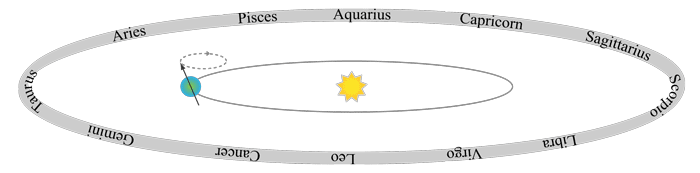
zodiacUnder the section, The Making of the Hindu Calendar, we mentioned the solar ecliptic. The sun’s path across the sky from east to west and extending about 10 degrees above and below this ecliptic is known as the band of the zodiac. This 360 degree band is divided into twelve 30 degree segments known as the signs of the zodiac, rashis in Sanskrit. The first sign is Aries, which is then followed by Taurus, Gemini, Cancer, and so on. Both Western and Hindu astrology use these signs of the zodiac in the same order. In Hindu astrology, not only is this system of zodiac signs used, but there is also another way of dividing the zodiac and this is the nakshatras system, which divides the zodiac into twenty-seven 13 1/3 degree segments called nakshatras. This adds another level of interpretation to Hindu astrology that is generally not found in Western astrology. We will not be discussing this Nakshatra system of interpretation as it goes into more details than necessary here.
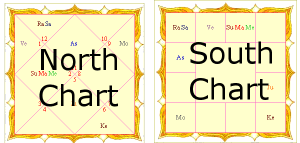
When an astrological chart is prepared, Hindu astrology first calculates the astronomical position of nine celestial influences (see Nava Graha) and then places them on a symbolic diagram called a horoscope. In addition to these nine influences, the sign that is rising above the eastern horizon for the time of the event is also calculated and shown on the horoscope. This is called the ascending sign of the zodiac or the lagna in Sanskrit. This ascending sign then becomes the starting point or first house of interpretation for the chart.

DIFFERENCES BETWEEN NORTH INDIAN & SOUTH INDIAN CHARTSThere are different ways of expressing this “snapshot” of the sky. The common North Indian method uses a set of diamond shaped boxes to show the various signs of the zodiac and it is read in a counter clockwise direction. The typical South Indian method uses a system of rectangular boxes that is read in a clockwise direction. There is also a Bengali style that is read in a counterclockwise direction. All these methods do the same thing, namely symbolically show the various celestial influences at a particular moment in time and place, and in their respective signs of the zodiac.

So far as preparing a chart is concerned, the endeavor is simply astronomy, a description or snapshot of the sky. The astrology comes in when we attempt to derive meaning from celestial bodies and their positions in the zodiac. What does it mean to have Mars in Aries or the moon in Leo. What does it mean when Saturn is with Mars in Aries? What does it mean when Jupiter is five zodiac signs after the moon? What does it mean when the sun and Saturn are 180 degrees apart? The answers to these questions constitutes astrology.

Astrology, which involves the analysis of a intricate system of planetary and other relationships and their subsequent interpretations, cannot be adequately described in this short discussion. It is possible, however, to provide a basic understanding of how an astrologer approaches his or her craft, which can be useful if a person ever goes to to an astrologer to have a horoscope prepared and read.

In Hindu astrology the nine celestial influences that are used for interpretation are: the sun, the moon, Mars, Mercury, Jupiter, Venus, Saturn, and the north and south lunar nodes (Rahu and Ketu). There are other influences that are sometimes examined, but they are not important for our purposes. In addition to these 9 celestial influences, an astrologer will also examine the signs of the zodiac where these celestial influences are located, the houses in which they are residing, and certain key relationships between these components. In addition, an astrologer will also calculate the planetary periods (dashas) that are used to determine when events are likely to occur in a particular chart. Each of the celestial bodies, plus the signs of the zodiac and the houses carry symbolic meanings that are used to make an astrological interpretation. Here is a brief description of some the symbolic meaning of the celestial bodies, the astrological the signs and the houses of interpretation, which will be useful in understanding how an astrologer makes a reading.

The Nine Celestial Influences (Grahas)

The sun is the soul, the heart, the father, authority, heat, power and ambition.
The moon is the mind, mother, water, coolness, emotions, memory and common sense.
Mars is courage, bravery, sports, competition, maleness, passion, action, war, cuts and burns.
Mercury is intelligence, learning, teaching, speech, expression, communication and writing.
Jupiter is fortune, expansion, wealth, children, religion, philosophy and wisdom.
Venus is marriage, love, romance, luxuries, prosperity, femininity, artistic expression, grace, and beauty.
Saturn is slowness, struggle, discipline, dryness, labor, asceticism, accidents, and chronic disease.
Rahu is material desire, dullness, ignorance, laziness, sleep and addictions and ancestral karma.
Ketu is asceticism, spirituality, psychic ability, ghosts, eccentricity and occultism.

The Signs of the Zodiac (Rashis)

Aries is the first sign of the zodiac and is ruled by Mars and so has many of the qualities of this planet. Aries is action, impulse, independence, force, self-expression and competition.
Taurus is the next sign and is ruled by Venus. Taurus is the earth, feelings, stability, conservation, relationships and partnerships.
Gemini is ruled by Mercury. Gemini is energy, nervousness, restlessness, intellect, language, artistic ability, and communications.
Cancer is ruled by the moon, which is mind and the mother. Cancer is openness, friendship, sympathy, care, nurturing, emotions, family and the home.
Leo is ruled by the sun and therefore stands for heat, order, harmony, and central control. Leo is ambition, power will, pride, show and drama.
Virgo is ruled by Mercury. Virgo stands for intellect, command of language, nervousness and sensitivity. Virgo is also detail and precision.
Libra is ruled by Venus. Libra is leadership, power, command of ideas and idealism. Libra is reform, revolution, prophets, and even fanaticism.
Scorpio is ruled by Mars. Scorpio is secretive, sensual, sexual and eccentric. Scorpio is both physical and mental, and so stands for martial force as well as psychic force.
Sagittarius is ruled by Jupiter and stands for grace, beneficence, completion and harmony. Sagittarius is expansion, morality, justice, philosophy and religion.
Capricorn is ruled by Saturn and therefore signifies hard work, perseverance, tenacity and accomplishment. Capricorn is also power, order and organization.
Aquarius is also ruled by Saturn and tends to exhibit the dark side of Saturn. Aquarius is deviation, occultism, eccentricity, but also includes sacrifice, humanitarianism, ingenuity and faith.
Pisces is ruled by Jupiter. Pisces stands for emotion, expansion, intuition, liberation and imagination. Pisces is also dependance and conservatism.

The Houses of Interpretation (Bhavas)

There are 12 houses of interpretation. The first house is always determined by the place of the rising sign, the second house follows after that, and so on. Each of the houses have the following symbolic importance:

The first house is the house of life purpose and physical existence. It indicates the self, the ego, character, appearance, the head and general well being.
The second house is money, wealth, self expression, knowledge, speech, family and imagination.
The third house shows courage, bravery, efforts, adventures, brothers and sisters, enthusiasm and motivations.
The fourth house shows mother, the heart, land, buildings, comforts, vehicles, happiness and ancestral property.
The fifth house is children, intelligence, learning, destiny, government, investment, romance, and charity.
The sixth house shows health, illness, enemies, litigation, obstacles, subordinates and employees.
The seventh house is the spouse, married life, relationships, partners, and  foreign residence.
The eighth house is longevity, death, wills and inheritance, legacy, taxes, occult matters, secrets and sex.
The Ninth house is father, fortune, solutions, religion, philosophy, faith, worship, wisdom and long journeys.
The ten house shows career, fame, worldly power, professional activities, honors, and life purpose.
The eleventh house shows gains, wealth, opportunities, major goals and desires,
The twelfth house is expenditure, loss, insanity, imprisonment, final salvation, the state after death, secret sexual pleasures, and life in remote places.

Planetary periods (Dashas)

Hindu astrologers have observed that life has certain “moods” or “phases,” which are governed by the nine celestial influences. In Sanskrit these planetary periods are called periods (dashas). Every life has a sun period, a moon period, a Mars period, a Jupiter period, and so on. These periods last for different time lengths. A sun period always lasts for six years, a moon period for ten years, a Mars period for seven years, a Venus period for twenty years, etc., so that the total number of years for all the planetary periods is 120 years. Why the length of each planetary period varies and how these planetary periods are determined is a technical matter that goes beyond the scope of this discussion, suffice to say that each chart will have these different planetary periods. The value in knowing the planetary periods is to understand when, for example, the influence of the sun will be strongest in the person’s life and therefore to know when sun related influences are most likely to occur. The same for the moon and Mars, and all the other planets. This helps in prediction. You might compare the idea of planetary periods to music. For a certain time a song may be in the key of C, then the song changes to the key of D minor, and then to another key. During the “C period” the music will have a certain sound and mood, but when it changes to D minor the music exhibits a different sound and mood. In this way a life will go through its different planetary periods and during each period will have a certain tone and mood, so to speak. Planetary periods are also divided into smaller sub-periods and then even into sub-sub-periods. This gives the astrologer even more ability to make predictions. The matter of planetary periods is complex, but at least to know in a general way about these periods will help a person understand how an astrologer reads a chart.

Interpretation

How astrologers derive meaning from these symbols is logical and easy to understand. What would it mean, for example, if Mars, the planet of conflict and war, was in the fourth house of home along with the moon, the planet of mother and mind? This would suggest troubles with mother, troubles in the home and disturbances of the mind. Instead of Mars what would it mean if Jupiter was in the fourth house along with the moon? This would suggest prosperity in the home, happiness with mother, and peace in the mind. What would it mean if Saturn and Mars, the planets of struggle and conflict, were together in the 10th house of career? This would suggest conflict, delay, and struggles, yet the drive to success in one’s career. And what if Mars was in the seventh house of marriage? This would suggest war and conflict within the marriage and perhaps even divorce. And what if the moon or Jupiter, positive influences, were in the seventh house instead of Mars. This would be good for marriage and suggests happiness and children. These examples are simple and straight forward, but life is more complicated than this. What would it mean, therefore, if the moon and Jupiter were in the seventh house of marriage along with Saturn or Mars? In this case we have good influences mixed with evil influences. Would this mean some good and some bad effects? But how much good and how much evil? And when would the good occur and when would the evil occur? Would the marriage even survive? Would a second marriage also have these mixed effects? Now the matter becomes complicated and only the careful and experienced analysis of a trained astrologer can sort these influences out and make an informed opinion about the marriage. Astrologers have many mathematical systems to measure the strengths of these influences and to determine the times in life when these influences, both positive and negative, will be in force. Even though more detail on this topic goes beyond the scope of this discussion, the reader, at least, has an idea of how an astrologer approaches his craft. There is a lot of learning that goes into a sound astrological interpretation.

Gems and Pujas

Once a chart has been analyzed and a reading given, it is normal to find both negative and positive influences within a chart. Even a “good” planet may bestow negative results and a “bad” planet can bestow positive results under the right conditions, and so a client may want a way to diminish these negative effects or increase the positive influences. In Hinduism there are many ways that this can be attempted, but the two most common ways are through the wearing of gems or the performance of puja. The idea behind the wearing of gems is as follows. Every planetary influence has both a positive and negative side. The moon, for example, is generally a positive influence, but it also has a negative side, dark emotions and insanity. Mars is generally not a positive influence. It is war and conflict, but it is also courage and strength–good qualities. So even Mars has a positive side. In general, planets that are strongly positioned in a chart bestow their positive side and planets that are weakly positioned bestow their negative side. Each planet is also associated with a certain gem stone (and even a metal and a color, etc.) Jupiter is yellow sapphire, the Moon is white pearl, Mercury is green emerald, Mars is red coral, and so forth. By wearing the gem of a particular planet one increases the power of that planet and thereby brings out the positive qualities of that planet. If the moon is weak in a chart, one could increase the power of the moon by wearing a pearl. A yellow sapphire would increase the strength of Jupiter; an emerald would increase the effect of mercury; a diamond would do the same for venus, etc. The gem would also be put on at a time when the influence of the respective planet is highest. For example, a pearl, for the moon, would first be put on during a Monday, the moon’s day. A diamond would be put on for Venus on Friday. In this way, you can often get a good indication of a person’s astrological condition by noticing the kinds of rings they wear. People will often wear multiple rings for various astrological reasons.

The idea behind an astrological puja is as follows. If it is determined that Mars is a enemy in a particular chart, in other words, Mars exerts a negative influence, then a puja for Mars could be performed. During the puja, symbolically Mars is invited and treated as a guest and shown all respect and honor by being bathed, fed and given gifts, etc. In other words, one way to neutralize an enemy is to make him your “friend.” The idea behind a puja is to invite your enemy over for a “visit” and make him your friend by honoring him food and gifts and thereby decreasing his negative influence over you. The appropriate gem, a red coral in the case of Mars, may also be put on during the Mars puja. And of course, the puja would be performed on a Tuesday, Mar’s day.  These kinds of astrological pujas are called Nava Graha pujas and they are commonly performed within Hinduism. By far the most commonly performed astrological pujas are for Saturn, Mars and Rahu, the three most “cruel” of celestial influences.

The Uses of Astrology

Hindu astrology is a vast subject and in these short pages I have tried to explain in simple terms the basic workings of astrology, how an astrologer makes an interpretation, and some of the techniques that astrologers use to affect positive change. In the hands of an experienced astrologer, astrology can be a powerful tool for good. It can give insights into one’s character, into one’s strengths and weaknesses, and into the subtle forces around us, but like any tool it must be used with discretion and caution, and it has limitations. An immature astrologer can cause havoc in the minds of parents by telling them of a child’s future diseases, divorce and even premature death. On the other hand, an astrologer can see hidden talents and encourage parents to cultivate these strengths within their child. An astrological chart can be used to understand the basic psychology of a couple and thereby help a troubled relationship. It can give a partner insight and strategies in dealing with a difficult relationship. But astrology can also lead to dependency, and to a situation where a person avoids taking responsibility for one’s life. So like most things in life it has positive and negative aspects. It is to the credit of Hinduism that it has managed to keep within its fold an ancient discipline such as astrology. As the world continues to develop and move ahead it is good that there are traditions like Hinduism that preserve and even keep thriving one of the oldest of all human pursuits.

Filed Under: Miscellanea

  • « Previous Page
  • 1
  • …
  • 12
  • 13
  • 14
  • 15
  • 16
  • …
  • 33
  • Next Page »
  • About Us
  • Hindu Primer
  • Biography
  • Translations
  • Articles
  • Vedic Chants
  • Sanskrit

Copyright © 2024 — Sanskrit Religions Institute • All rights reserved. • Privacy Policy • Disclaimer